
Aroma vs Zojirushi: Is the Premium Upgrade Worth It?
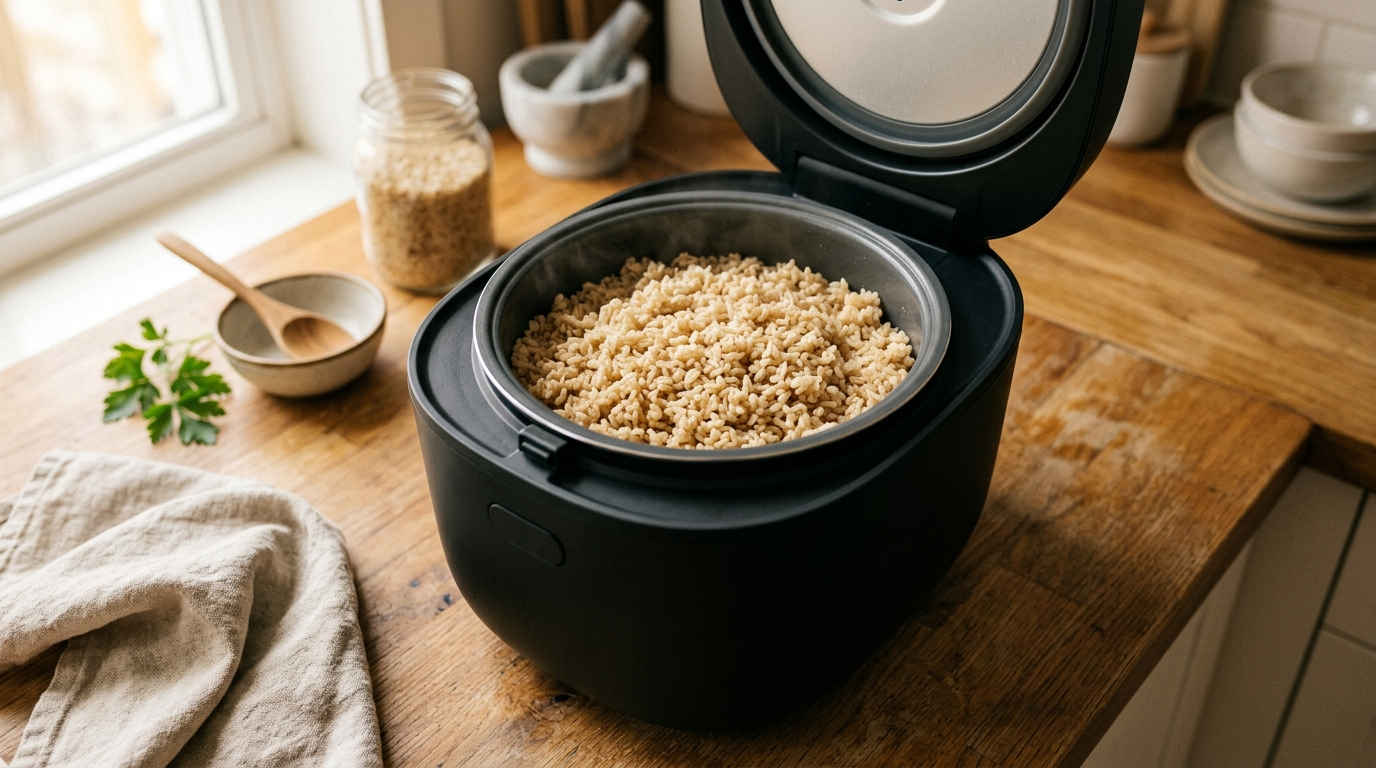
Aroma and Zojirushi sit at opposite ends of the rice cooker market. This research-based comparison breaks down price tier, build, cooking quality, features, and longevity — and when the premium upgrade is worth it.
As an Amazon Associate we may earn a commission from qualifying purchases made through links on this page, at no extra cost to you.
If you have spent any time reading rice cooker discussions, two brands come up more than any others — and they could hardly be more different. Aroma is the budget-friendly workhorse that lives on countless American countertops, while Zojirushi is the Japanese premium benchmark that owners tend to describe in near-reverent terms. The question is not really which one is “better” in the abstract; it is whether the jump from a budget machine to a premium one is worth it for the way you cook.
This is a research-based comparison, not a hands-on test. What follows synthesizes the consensus from verified owner reviews, manufacturer specifications, and expert sources — no lab data, no invented benchmarks. The goal is to help you decide where your money is best spent.
Aroma vs Zojirushi at a glance
Aroma Housewares is a United States-based company (Aroma Housewares) best known for affordable digital rice cookers and multicookers. Its machines typically pair a straightforward one-touch or digital control panel with extras like a steam tray, a delay timer, and presets for white rice, brown rice, and quick cooking. They are designed to be inexpensive to buy and dead simple to operate.
Zojirushi is a long-established Japanese manufacturer (Zojirushi) whose cookers are built around advanced microcomputer (Micom) logic — including its well-known “Neuro Fuzzy” line and pricier induction-heating (IH) models. The emphasis is on cooking precision, rice texture, and longevity rather than on the lowest sticker price.
In short: Aroma optimizes for value and convenience, while Zojirushi optimizes for cooking quality and durability. Almost everything else in this comparison flows from that single difference.
Price tier: everyday value vs long-term investment
This is where the two brands diverge most obviously. Aroma sits firmly in the budget tier, with most of its popular cookers priced as everyday countertop appliances. Zojirushi’s Neuro Fuzzy and induction models occupy the premium tier, and the flagship induction cookers can run to several times the price of a typical Aroma machine.
Neither positioning is inherently wrong. A budget cooker is a sensible, low-risk purchase for a small household that eats rice a couple of times a week. A premium cooker is an investment that only makes sense if you cook rice often enough — and care enough about the texture — to notice the difference over years of use. If you want a fuller framework for weighing these trade-offs, our rice cooker buying guide walks through the decision step by step.
The key point is that price tier is not the same as value. A budget machine that lasts several years and makes rice you are happy with can be outstanding value; a premium machine bought for occasional use may never pay back its higher cost.
Build quality and materials
Owner feedback on build quality is consistent and predictable. Aroma cookers are predominantly plastic-bodied, with lightweight inner pots coated in a nonstick finish. That keeps the price down and the weight low, but it also means hinges, latches, and control buttons can feel less substantial, and long-term owners sometimes report wear on the nonstick coating after a few years of regular use.
Zojirushi cookers are noticeably more substantial. The bodies tend to be thicker and more rigid, the lids and hinges feel more precisely engineered, and the inner pots are heavier — in induction models, the pot itself is part of the heating system. That heft is not just aesthetic; it contributes to more even heat distribution and a cooking environment that holds temperature tightly.
None of this means an Aroma is poorly made for its price — it is built to a budget, and reviews suggest it generally meets that budget well. It does mean that if build feel and material quality matter to you, the premium tier has a real, tangible advantage. Either way, the nonstick inner pot is the part most likely to age, and our guide to how to clean a rice cooker properly will help you protect it regardless of which brand you choose.
Cooking performance and rice quality
This is the section that most often separates the two brands in owner reviews, and it comes down to how cleverly each machine controls heat.
Most Aroma digital cookers use basic Micom-controlled logic: you select a program, and the machine follows a preset temperature curve. For everyday white rice, this works well, and a large majority of owners are perfectly satisfied with the results. Where budget logic shows its limits is with more demanding grains — brown rice, sushi rice, basmati — and with achieving that distinctively plump, evenly hydrated texture that serious rice eaters chase.
Zojirushi’s higher-end cookers take a more sophisticated approach. The Neuro Fuzzy models use adaptive Micom logic that makes small, continuous adjustments to temperature and cooking time as the rice progresses — you can read more about the distinction in our explainer on Neuro Fuzzy vs Micom rice cookers. The induction models go further, heating the entire inner pot through a magnetic field rather than from a single element at the base, which produces very even cooking. (For a deeper look at that trade-off, see is an induction rice cooker worth it in our guides.)
The practical upshot, based on owner consensus: Zojirushi machines tend to produce more consistently excellent rice across a wider range of grains, and they are especially praised for brown rice and sushi rice. If whole-grain cooking is important to you, our roundup of the best rice cookers for brown rice is worth a look. Aroma machines make genuinely good everyday rice; they simply give you less fine-grained control over the outcome.
Features and everyday usability
Aroma’s strength here is breadth for the money. Many models double as slow cookers or steamers, ship with a steam tray, and include a delay timer so rice is ready when you walk in the door. The interface is intentionally simple, which first-time owners appreciate. The trade-off is fewer cooking programs and less granular control.
Zojirushi cookers generally focus on doing one thing extremely well. You will find extended keep-warm modes, reheating cycles, and multiple settings tuned for specific rice types, but fewer all-in-one multicooker functions. The interface is more involved, and there is a learning curve — though our guide to using a Zojirushi rice cooker makes that straightforward.
Both brands keep rice warm after cooking, but leaving rice on keep-warm for many hours has real food-safety limits. See our keep-warm safety guide before you plan to hold rice all day.
Longevity, reliability, and warranty
Longevity is where the premium tier’s higher purchase price can start to look like a better long-term deal. Zojirushi cookers have a strong reputation for durability — it is common to find owners reporting a decade or more of regular use — and the company backs its products with a limited warranty, with longer coverage on some induction heating components. That is consistent with how Japanese small appliances are generally engineered: heavier, more serviceable, and built to last.
Aroma cookers are reliable for their category and the brand offers a limited warranty, but they are not engineered with the same multi-decade lifespan in mind. Reviews suggest several years of dependable service is typical, after which wear on the nonstick pot or controls is common. Again, that is a reasonable expectation for the budget tier, not a flaw.
If you want a sense of how real long-term owners feel about both brands, our summary of what Reddit recommends is a useful reality check against marketing claims.
When the Zojirushi upgrade is worth it
The premium upgrade earns its keep when rice is a daily staple in your home and you genuinely care about texture. If you cook short- or medium-grain rice often, eat a lot of brown or sushi rice, or you have been frustrated by the results from a basic cooker, a Zojirushi is a sensible long-term purchase. The same is true if you value durability and expect to keep one appliance for many years rather than replacing it.
If that sounds like you, the Neuro Fuzzy line is the most popular entry point into the brand — you can browse Zojirushi rice cookers on Amazon to compare current models and availability. For a deeper, brand-specific breakdown, our guide to the best Zojirushi rice cookers and our honest take on whether a Zojirushi is worth it go into more detail.
When Aroma is the smarter buy
Aroma is the rational choice when you want good rice without a large upfront commitment. If you cook rice a few times a week, you are feeding a smaller household, you want a versatile machine that steams and slow-cooks too, or you are simply unsure how much you will use a rice cooker and want to start affordably, a budget machine makes more sense than overspending on features you may never fully exploit.
If that fits your situation, browse Aroma digital rice cookers on Amazon to see current options. It is also worth matching capacity to your household first — our rice cooker size guide helps you avoid buying too big or too small.
Verdict
There is no universal winner here, only the right fit for your kitchen. Aroma delivers reliable, convenient, multi-function rice cooking at a budget price, and for most casual households it is genuinely all the machine you need. Zojirushi costs substantially more but rewards that investment with measurably better rice quality across a wider range of grains, stronger build, and a longer expected lifespan.
The simplest way to decide: if rice is an occasional side dish, buy Aroma and pocket the difference. If rice is a daily centerpiece and you care about getting it as good as it can be, the Zojirushi upgrade is worth it — and it is the upgrade you are least likely to regret years from now.
Frequently asked questions
Is Zojirushi really that much better than Aroma? “Better” depends on what you value. On measures of rice texture, consistency, and durability, Zojirushi cookers perform at a higher level according to owner consensus. For straightforward white rice a couple of times a week, many owners find an Aroma perfectly satisfying, and the difference is much less noticeable.
Does the higher price of a Zojirushi pay off over time? It can, if you cook rice frequently and keep the cooker for many years, because you are spreading the cost over a longer lifespan and better daily results. For infrequent use, the math rarely works in favor of the premium tier.
Will an Aroma make good brown rice? Yes, with its brown-rice preset, though budget logic is less precise than adaptive Micom or induction heating. If brown rice is a priority, see our best rice cookers for brown rice guide.
Which lasts longer? Based on long-term owner reports, Zojirushi cookers are generally expected to outlast Aroma cookers by a meaningful margin, which is part of why their higher price can be justified as a long-term investment.
Related Articles
Zojirushi vs Cuckoo: Which Premium Rice Cooker Wins?
Head-to-head comparison of the two best premium rice cooker brands. Zojirushi Neuro Fuzzy vs Cuckoo Pressure IH, features, performance, and value compared side by side.
comparisonBest Stainless Steel Rice Cookers (No Teflon or Non-Stick)
Looking for a rice cooker without Teflon? These keepers use uncoated stainless inner pots — Elite Gourmet, Aroma ARC-753SG, Tatung, and a Duo steel insert — not a leftover digital Aroma ASIN.
comparisonBest Induction Heating Rice Cookers: IH vs Standard
Induction heating rice cookers deliver the most even, precise cooking available. Here is how IH technology works and which models are worth the investment.