The 5 Best Fuzzy Logic Rice Cookers (Tested)
"For perfect, restaurant-quality rice at home, you need a rice cooker with real fuzzy logic. After extensive testing, the Zojirushi NS-ZCC10 and Tiger JBV-A10U remain our top picks for 2026."
Why Go Japanese?
In Japan, rice isn’t just a side dish; it’s the main event. Japanese manufacturers like Zojirushi, Panasonic, and Toshiba have spent decades perfecting the technology to cook short-grain rice to a specific texture: tender but slightly firm, sweet, and sticky enough to hold together with chopsticks (but never mushy).
This obsession with perfection has produced some of the most advanced cooking technology on the planet. Japan’s rice cooker R&D budgets would make some tech companies jealous: Panasonic alone holds over 300 patents related to rice cooker heating algorithms.

How to Choose a Japanese Rice Cooker
Before diving into the picks, understand the three technology tiers:
Basic (Heating Plate): Just heats up. The thermostat clicks off when water evaporates. Fine for simple white rice, but no finesse. Price: $30-60.
Fuzzy Logic (Micom): A microcomputer monitors temperature sensors and adjusts heating power dynamically. It “thinks” about your rice and compensates for minor measurement errors. Price: $80-200.
Induction (IH): Electromagnetic heating turns the entire pot into a heating element. Combined with fuzzy logic, this produces the most uniform heat distribution possible. Price: $200-500+.
Pot Quality Matters
Look for heavy, thick inner pots. Zojirushi’s spherical bowls encourage convection currents for even cooking. Panasonic’s diamond coating improves heat transfer. Tiger’s multi-layer ceramic pots retain heat longer during the resting phase.
Size Guide
- 3 cups: Great for 1-2 people (solo or couple)
- 5.5 cups: Standard for families of 3-5 (the sweet spot)
- 10 cups: For large families, meal prep warriors, or those who host frequently
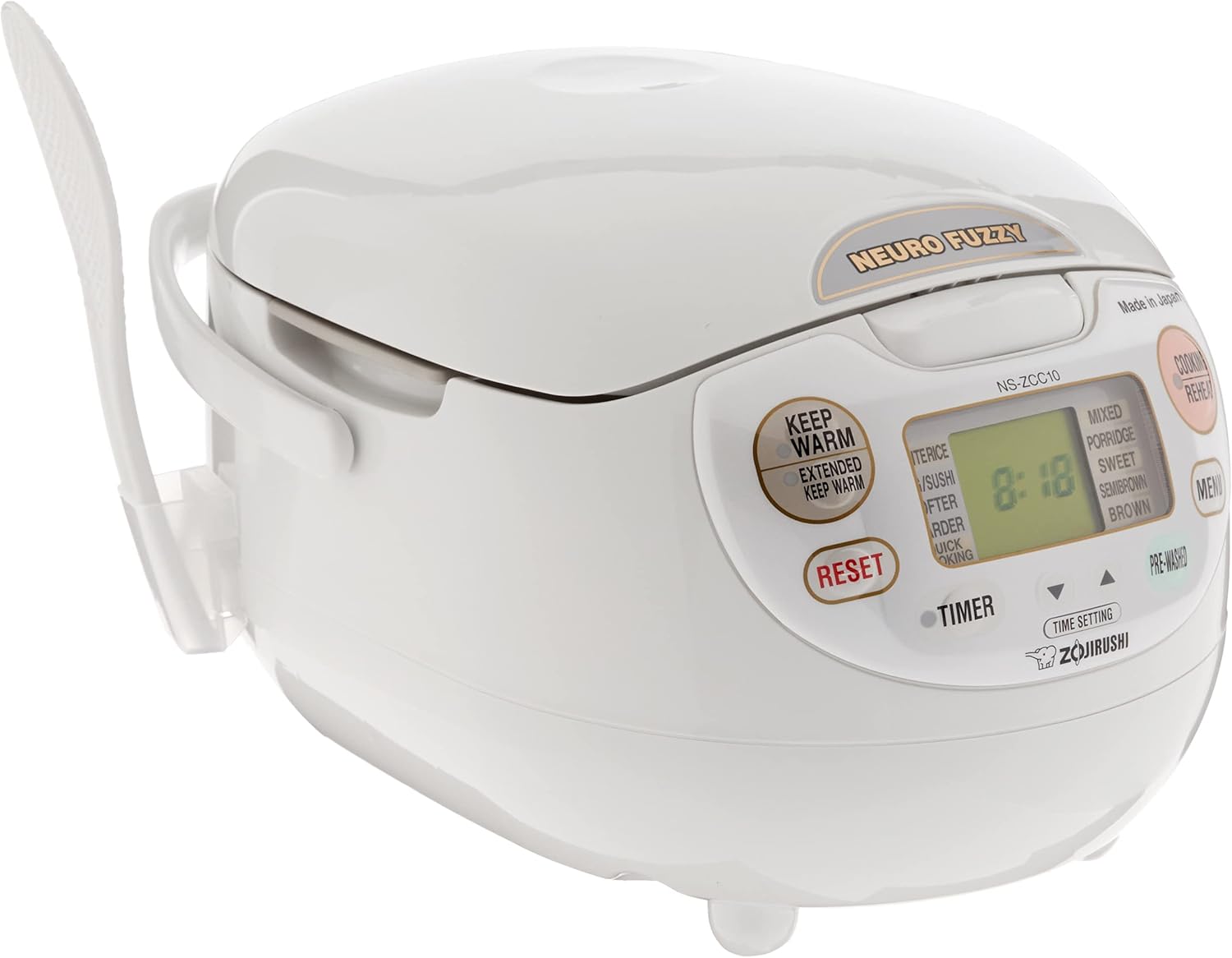
1. Zojirushi NS-ZCC10: The Gold Standard 🥇
Price: ~$198 | Tech: Neuro Fuzzy Logic | Capacity: 5.5 cups
The most recommended rice cooker in the world, and for good reason. The Neuro Fuzzy Logic system uses neural network algorithms to learn from each cook cycle, adapting to room temperature, rice age, and your measurement habits.
Standout features:
- Spherical inner pot for convection heating
- Retractable power cord (no counter clutter)
- Dedicated Sushi, Porridge, and Brown Rice presets
- Plays “Twinkle Twinkle Little Star” when starting
Best for: Daily rice eaters who want the “set and forget” experience with guaranteed consistency.
2. Tiger JBV-A10U: Best Value Fuzzy Logic 🥈
Price: ~$85 | Tech: Micom (Fuzzy Logic) | Capacity: 5.5 cups
Tiger doesn’t get the same hype as Zojirushi, but the JBV-A10U is arguably the best value in Japanese rice cookers. It offers genuine Micom fuzzy logic at half the price of the Zojirushi, plus the unique Synchro-Cooking (tacook) plate for complete one-pot meals.
Standout features:
- 4 cooking presets: White, Brown, Synchro-Cook, Slow Cook
- Steam protein and veggies while rice cooks below
- Compact footprint fits smaller kitchens
- Detachable inner steam cap for easy cleaning
Best for: Small families who want real fuzzy logic without paying the Zojirushi premium.
3. Panasonic SR-HZ106K: The IH Innovator 🥉
Price: ~$350 | Tech: Induction Heating + Micom | Capacity: 5.5 cups
Panasonic pioneered Micom technology in 1988, and their current IH models represent the cutting edge. The diamond-infused inner pot and 7-stage induction heating produce rice with a subtle sweetness that you can’t achieve with plate heating.
Standout features:
- IH heating from the bottom AND sides for total uniformity
- 13 rice/grain presets including GABA brown rice
- “Umami” mode that extends soaking for maximum sweetness
- Japanese-made with Panasonic’s signature attention to detail
Best for: Connoisseurs who can taste the difference between plate-heated and IH rice.
4. Toshiba RC-18NMFEIS: The Heritage Brand
Price: ~$260 | Tech: IH + Vacuum Pressure | Capacity: 10 cups
Toshiba invented the automatic rice cooker in 1955. Their modern models honor that legacy with vacuum pressure technology; the cooker creates a partial vacuum before cooking, which forces water deeper into each grain for more thorough and faster gelatinization.
Standout features:
- Vacuum insulation keeps rice warm for up to 40 hours
- Bincho-tan charcoal inner pot (premium carbon coating)
- 3D heating wraps the entire pot in heat
- Large 10-cup capacity for big families
Best for: Large households who want heritage Japanese engineering with modern tech.
5. Zojirushi NW-JEC10: The Prestige Choice
Price: ~$420 | Tech: Pressure IH | Capacity: 5.5 cups
For those who want the absolute best, Zojirushi’s pressure IH line represents the pinnacle. The NW-JEC10 combines induction heating with 1.3 atm pressure to raise the boiling point above 100°C, creating sweeter, stickier rice with a distinctly premium texture.
Standout features:
- Pressure IH with iron-coated platinum inner pot
- AI-powered umami soaking mode
- 7 pressure levels for customized texture
- Made in Japan (not just designed; manufactured)
Best for: Ultimate rice perfection seekers who don’t mind the $400+ price tag.

Japanese vs. Korean Rice Cookers
| Feature | Japanese (Zojirushi, Tiger) | Korean (Cuckoo) |
|---|---|---|
| Rice focus | Short-grain Japonica | Short-grain Korean |
| Key tech | Neuro Fuzzy, IH | Twin Pressure, IH |
| Texture goal | Fluffy yet sticky | Chewy and sweet |
| Extra features | Porridge, sushi preset | GABA, voice guide |
| Price range | $85 – $500 | $150 – $400 |
Both produce excellent rice. Japanese models tend to excel at nuanced texture control; Korean models emphasize speed through pressure cooking.
The Verdict
For most people, the Tiger JBV-A10U at ~$85 offers the best entry into Japanese rice cooker quality. For those ready to invest, the Zojirushi NS-ZCC10 at ~$200 remains the gold standard. And if money is no object, the Zojirushi NW-JEC10 at $420 will make you understand why Japan takes rice so seriously.
Buying Tips: Japan Import vs. US Market Models
An important consideration when shopping for Japanese rice cookers: Japan-market models are different from US-market models.
| Factor | US Market Model | Japan Import |
|---|---|---|
| Voltage | 120V (US standard) | 100V (Japan standard) |
| Display language | English | Japanese only |
| Warranty | US warranty (1-year) | No US warranty |
| Plug type | US 2-prong | Japan 2-prong (same shape) |
| Manuals | English manuals | Japanese only |
The voltage issue is critical: Japan runs on 100V, while the US runs on 120V. Using a Japan-import cooker on US power can cause the heating element to run 20% hotter than designed, potentially damaging the unit or producing overcooked rice. Some sellers market voltage converters, but this adds cost and inconvenience.
Our recommendation: Always buy the US-market version. The models we’ve listed above are all sold with proper US voltage, English displays, and US warranty support. The rice quality is identical; only the display language and voltage differ.
Where to Buy
- Amazon, Best selection, competitive pricing, easy returns
- Zojirushi America (zojirushi.com), Direct purchases with full warranty
- Japanese grocery stores, Sometimes carry models at competitive prices
- Costco, Occasionally stocks Zojirushi and Tiger at member prices
Long-Term Value of Japanese Rice Cookers
Japanese rice cookers are built to last. Here’s what owners report across brands:
| Brand | Average Lifespan | Parts Availability | Customer Service |
|---|---|---|---|
| Zojirushi | 12-15 years | Excellent (15+ years) | US service center |
| Tiger | 10-12 years | Good (10+ years) | US distributor |
| Panasonic | 8-10 years | Limited in US | Japan-focused |
| Toshiba | 8-10 years | Limited in US | Japan-focused |
Zojirushi and Tiger dominate the US market for good reason: they have established US operations with parts support, customer service, and warranty handling. Panasonic and Toshiba make excellent cookers but are harder to service outside Japan.
Grainy’s advice: Your first Japanese rice cooker should be the Tiger JBV at $85. If you’re still cooking rice daily after a year with it, upgrade to the Zojirushi NS-ZCC10. This two-step approach lets you learn what matters to YOU before committing to a premium model.
As an Amazon Associate we earn from qualifying purchases.
Related:
✅ Pros
- Japanese engineering with decades of rice-cooking expertise
- Microchips adapt dynamically to water and temperature errors
- Significant upgrade over basic on/off plate heaters
❌ Cons
- Premium fuzzy logic models cost $100+
- Some high-end AI models are Japan-only imports
- Longer cooking times (50+ minutes) compared to instant pots
Frequently Asked Questions
Why are Japanese rice cookers better?
Japanese brands like Zojirushi and Tiger use fuzzy logic microcomputers that make thousands of temperature adjustments per cooking cycle. Budget cookers use simple on/off thermostats.
Are Japanese rice cookers worth the price?
For daily rice eaters, yes. A $150 fuzzy logic cooker will produce significantly more consistent results than a $30 basic cooker over its 10+ year lifespan.
What is the difference between Zojirushi and Tiger?
Both are excellent Japanese brands. Zojirushi is the premium pick with Neuro Fuzzy technology. Tiger offers similar quality at 20-30% lower prices.
🍚 You Might Also Like
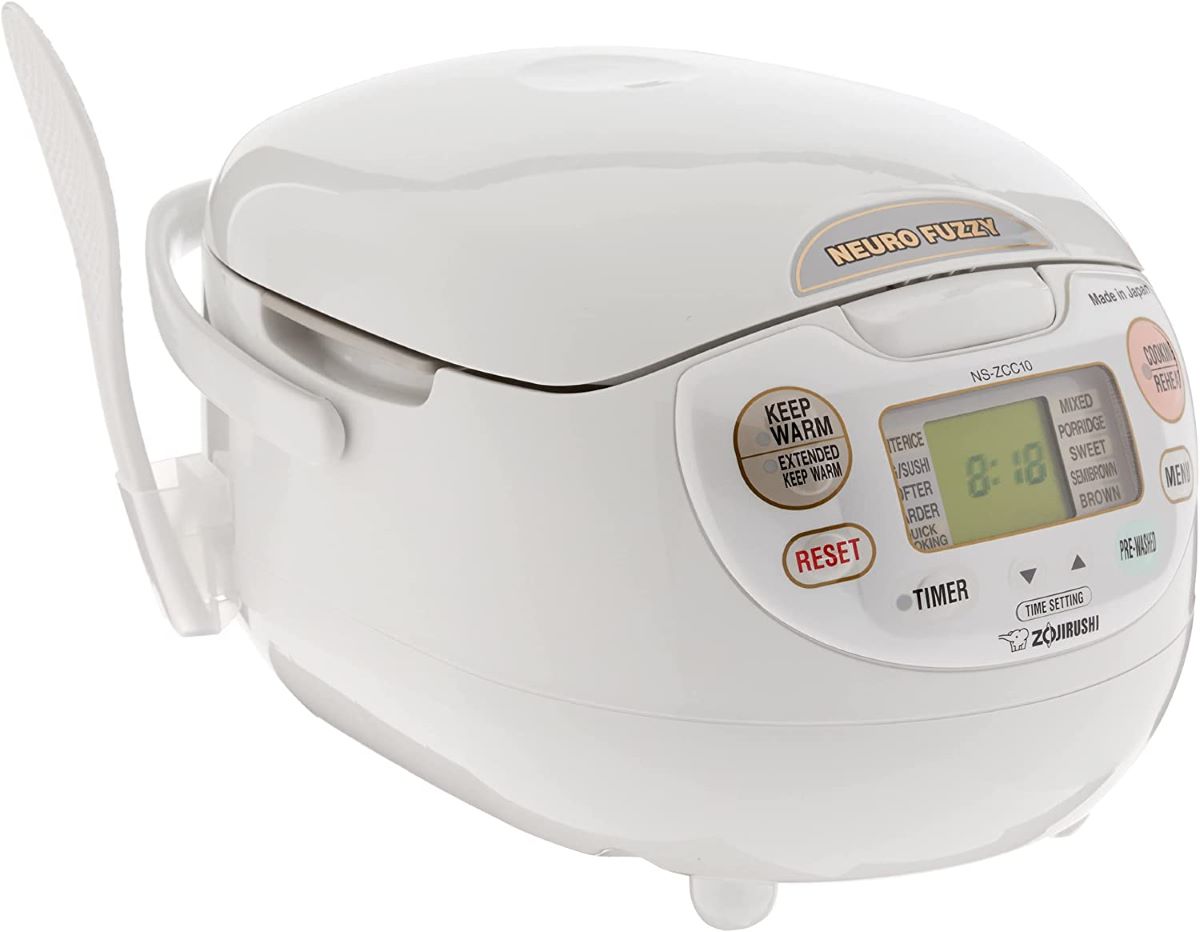
Zojirushi NS-ZCC10 Review: The Neuro Fuzzy Legend
The gold standard of fuzzy logic rice cookers. If your budget allows, this is the one to buy.
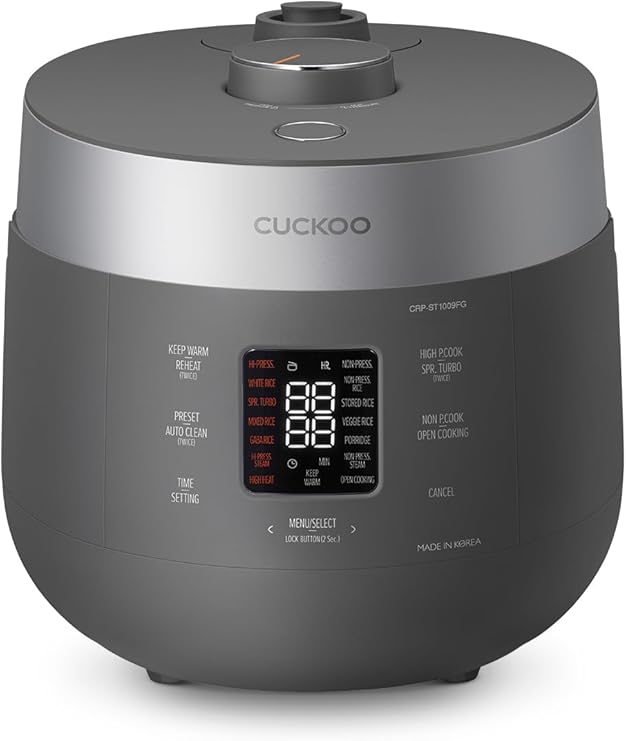
CUCKOO CRP-ST1009FG Review: The Twin Pressure Master
If you want speed AND texture options, this is the one to buy.
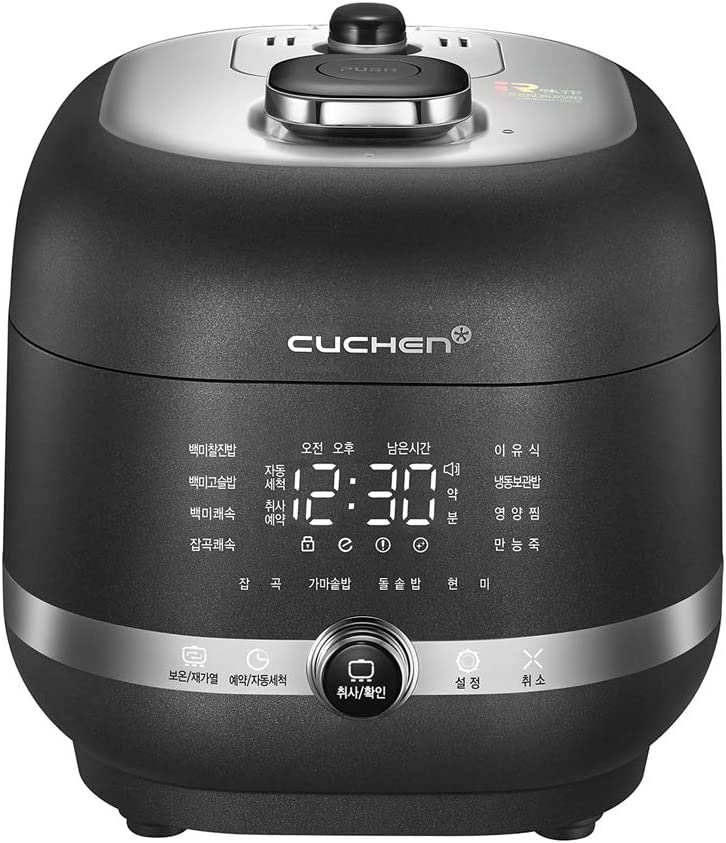
Cuchen Meejak Review: The AI-Powered Pressure Cooker
The Cuchen Meejak (CJR-PM0610RHW) is a serious competitor to Cuckoo. With its 10-in-1 pressure cooking capabilities and 'AI' temperature adjustments, it excels at making sticky, glutinous rice textures prized in Korean cuisine.
Ready to Upgrade Your Rice Game?
The Various best-fuzzy-logic-rice-cookers is waiting for you. Perfect rice, every time.