
Tiger JPW-H10U Review: A Premium Induction Rice Cooker That Earns Its Price
"A genuinely excellent induction cooker for households that eat rice most days and want brown rice and mixed grains done right — provided the premium price and longer cook cycles fit your routine."
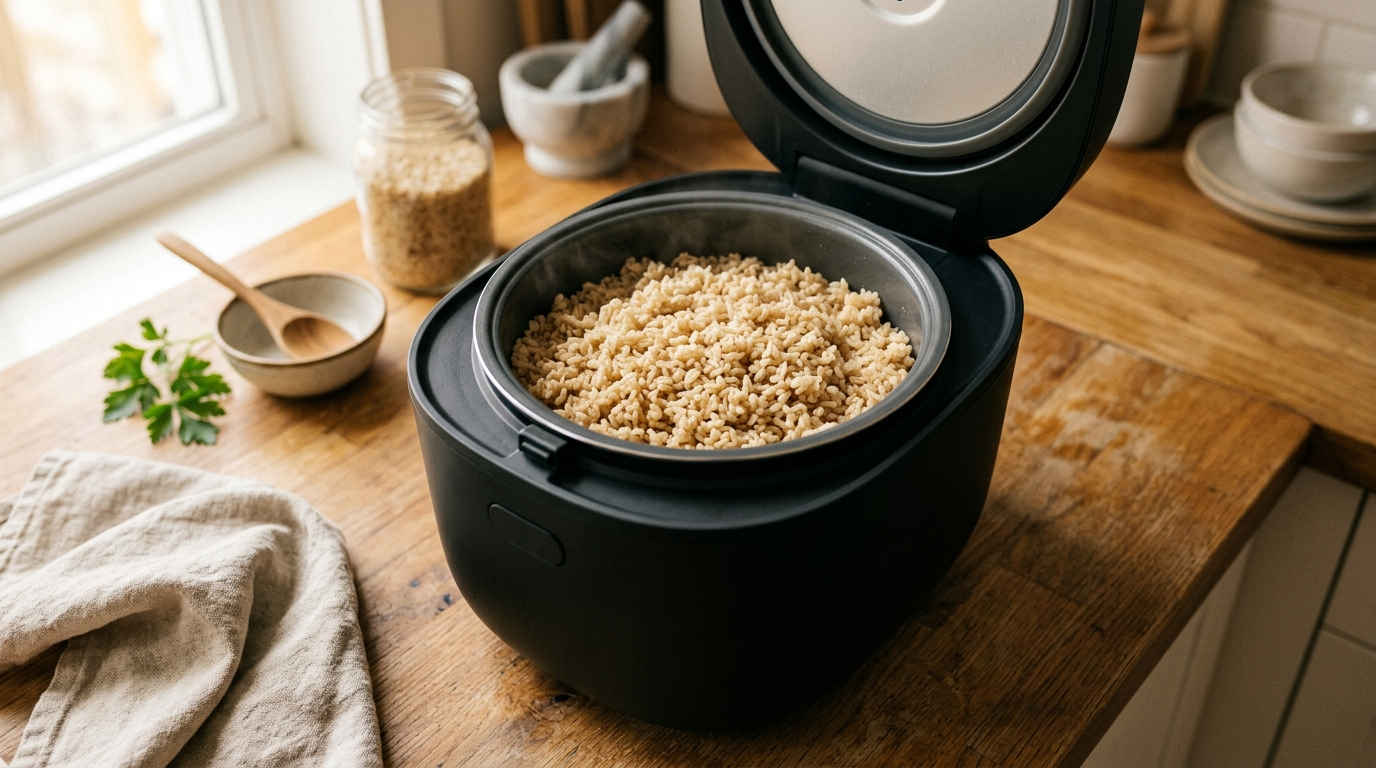
The Tiger JPW-H10U sits near the top of Tiger’s home lineup: a 5.5-cup induction heating (IH) rice cooker with a clean LCD and 14 cooking presets. Tiger is one of the names that surfaces almost any time you ask a serious rice eater for a recommendation, and induction heating is the technology that separates premium Japanese cookers from the budget micom field. But “premium” also means “expensive,” and the JPW-H10U asks a meaningful price for a countertop appliance that, at the end of the day, makes rice.
As an Amazon Associate we may earn a commission from qualifying purchases made through links on this page, at no extra cost to you. This is a research-based review: we synthesized the consensus of verified owner reviews with Tiger’s published specifications and the broader track record of Tiger’s IH cookers, then formed an editorial judgment. We didn’t run timed lab cook cycles or measure grain moisture. Here’s where the JPW-H10U genuinely earns its keep — and where it asks too much.
Who the Tiger JPW-H10U is for
The JPW-H10U is built for households that cook rice several times a week and care about texture — particularly people who eat a lot of brown rice, mixed grains, sushi rice, or short-grain Japanese rice. If you’re currently using a basic one-button cooker and wondering whether rice can really be that much better, an IH cooker like this is the category that delivers the most noticeable upgrade.
It’s a less obvious fit if you cook rice only occasionally, mostly plain long-grain white rice, or want the absolute fastest pot on the counter. For lighter or more casual use, a solid micom cooker covers most of the same needs for far less — see our Tiger JBV-A10U micom review for a sense of what a step-down Tiger gets you.
What you get: the specs
Pulled from Tiger’s published product information and the Amazon listing. Listing copy sells 14 presets and an LCD. Our note is whether induction actually changes weeknight white rice versus a cheaper Micom:
- Capacity: 5.5 cups uncooked (roughly 10–11 cups cooked) — the standard Japanese household size
- Heating: Induction heating (IH)
- Presets: 14 cooking programs spanning white, brown, mixed, sweet/sticky, and quick options
- Display: LCD panel for preset selection and status
- Convenience features: Extended keep-warm and reheat cycles, plus Tiger’s signature synchro-cooking tray
- Included accessories: Measuring cup, rice paddle, and the synchro-cooking steam tray
Induction heating, explained (and why it matters here)
Most budget rice cookers rely on a single heating element under the pot. Induction heating instead generates a magnetic field that turns the inner pot itself into the heat source, so heat is produced across the walls and base simultaneously rather than conducted up from the bottom (Tiger Corporation). The practical payoff is more even heat distribution and tighter temperature control — precisely the things that affect how uniformly each grain cooks and how the final texture comes out.
This is the single biggest reason the JPW-H10U exists as a distinct product from Tiger’s cheaper micom cookers. You are, above all, paying for the heating method and the control it allows.
How it cooks: what owners actually report
Across verified owner reviews, the most consistent praise is for the finished rice itself. Buyers describe fluffy, evenly cooked white rice with a texture that holds up well in keep-warm, and a clear step up from the budget cookers many of them upgraded from. The cooker’s temperature regulation gets the credit for avoiding the scorched-bottom or mushy-top results that cheaper pots can produce.
A few themes recur in owner feedback:
- Texture consistency: Batches cook through uniformly, with less grain-to-grain variance than entry-level cookers.
- Keep-warm longevity: Rice held in keep-warm mode stays palatable longer before drying out or discoloring.
- Reheat function: Useful for reviving refrigerated or leftover rice toward something closer to freshly cooked.
These are consensus impressions from owner reviews, not our own measurements. Individual results always vary with rice type, water ratio, and rinse habits.
Brown rice and mixed grains (where induction earns its keep)
If there’s a category where IH cookers separate themselves most visibly, it’s brown rice and mixed/multigrain blends — grains that are harder to hydrate and cook evenly than polished white rice. The JPW-H10U’s brown and mixed presets are built around longer, more carefully controlled soak-and-cook curves, and owners who specifically bought it for whole grains tend to be the most satisfied.
This lines up with what we see across the IH category generally. For more on why induction heating is the standout choice for whole grains, our best rice cooker for brown rice guide walks through the trade-offs in detail.
Synchro-cooking: steaming a meal over your rice
Tiger’s synchro-cooking feature — built around the included tray that sits above the rice — is one of the brand’s signature ideas. It lets you steam vegetables, dumplings, fish, or protein while the rice cooks underneath, all on a single cycle. For weeknight dinners it’s a genuine convenience: the rice and a side dish finish at roughly the same time using one appliance.
It’s worth setting expectations. Synchro-cooking works best with foods that steam well within the time rice takes to cook, and it isn’t a substitute for a dedicated steamer if you’re cooking for a crowd. Tiger details how the feature pairs with their IH programs on their product pages.
Build quality, the inner pot, and cleaning
Tiger’s IH cookers have a reputation for solid, long-lived construction, and owner feedback on the JPW-H10U’s fit and finish is consistent with that. The inner pot is heavy for a reason — that mass is part of how induction heating distributes heat evenly — and the inner lid removes for straightforward washing.
The main care caveat is the nonstick coating inside the inner pot. Like all coated pots, it’s vulnerable to metal utensils, abrasive scrubbers, and dishwasher cycles. Owners who treat it gently — plastic or wooden paddle, hand-washing with a soft sponge — report the coating holding up well; rougher handling shortens its life. A replacement inner pot down the line is possible but not cheap, so coating care is the real long-term ownership cost to keep in mind.
Keep-warm and everyday usability
The extended keep-warm is one of the features owners use constantly. For households that cook a batch in the morning and dip into it through the day, a cooker that holds rice at a food-safe temperature without rapidly degrading texture is a meaningful quality-of-life feature. The reheat cycle is the companion piece — bringing leftover rice back toward fresh rather than nuking it dry in a microwave.
The LCD and preset navigation take a short orientation period. It isn’t difficult, but with 14 programs and several modes, expect to consult the manual for the first few uses rather than intuiting everything. Once learned, the controls are straightforward.
The honest downsides
No review is complete without the gripes, and the JPW-H10U has a few real ones:
- Price. This is a premium cooker at a premium price. If you cook rice daily and care about it, that’s justifiable; if rice is an occasional side, it’s hard to rationalize over a $50–$100 micom cooker.
- Cook time. Induction cycles — especially the brown and extended-soak modes — run noticeably longer than a basic cooker’s quick cycle. That’s a trade-off for quality, but it means you can’t always decide on “rice in twenty minutes” at the last minute.
- Footprint. IH cookers are bulkier than basic 5.5-cup pots. Measure your counter.
- Coating longevity. The nonstick inner pot is the wear item. Care extends its life, but it won’t last forever.
- Manual clarity. A few owners find the instructions and preset labeling thinner than ideal, though it’s navigable.
How it compares in the premium field
The JPW-H10U isn’t the only strong induction option. Our best Japanese rice cookers roundup places Tiger’s IH cookers alongside Zojirushi’s, and Zojirushi’s own NP-HCC10 induction cooker is the most natural direct comparison — similar capacity, similar IH philosophy, and similarly focused on making brown rice worth eating. Choosing between them often comes down to preset specifics, inner-pot coating preference, and whichever is priced best the day you buy.
The bottom line
The Tiger JPW-H10U is a genuinely excellent induction rice cooker for the right household. If you eat rice most days, value texture, and — especially — if brown rice and mixed grains are a regular part of your rotation, the upgrade in cooking quality over a budget cooker is real and repeatable. The synchro-cooking tray and strong keep-warm round out a package that earns its place on the counter.
What keeps it from a blanket recommendation is the price and the cycle time. Casual rice eaters, last-minute cooks, and tight-counter kitchens can capture most of the value from a good micom cooker at a fraction of the cost. But for the household this cooker is built for — serious, frequent rice eaters — it’s a premium pick we’re comfortable recommending.
Check the current price of the Tiger JPW-H10U on Amazon
Frequently asked questions
Does the Tiger JPW-H10U use induction heating? Yes — it’s an IH (induction heating) cooker, which heats the inner pot directly through a magnetic field rather than from a base element. That’s the core feature separating it from Tiger’s cheaper micom models.
Is 5.5 cups enough for a family? For most households, yes. A 5.5-cup (uncooked) cooker produces roughly 10–11 cups of cooked rice, which comfortably serves a family of four to six with leftovers. For very large families or regular entertaining, a larger-capacity cooker may make more sense.
How long does it take to cook rice? White rice on a standard preset is comparable to other quality cookers, but IH cycles — and especially brown or extended-soak modes — can run noticeably longer than a budget cooker’s quick cycle. Plan ahead for whole grains.
Can I steam food at the same time as the rice? Yes, using the included synchro-cooking tray, which sits above the rice. It’s best suited to foods that steam well within a rice cook cycle.
Is the inner pot dishwasher safe? Tiger generally recommends hand-washing the nonstick inner pot with a soft sponge to protect the coating. Always defer to the care instructions that ship with your unit.
Related: Tiger Rice Cooker Instructions: Menus, Water Ratios, and Tacook, by Model Line.
✅ Pros
- Induction heating delivers more even, better-textured rice than budget micom cookers
- Excels at brown rice and mixed/multigrain settings
- Solid, durable build quality typical of Tiger's Japanese-made cookers
- Strong keep-warm and reheat performance for leftover rice
- Synchro-cooking lets you steam a side dish over the rice at the same time
❌ Cons
- Premium price puts it well above entry-level 5.5-cup cookers
- Induction cook cycles run longer, especially for brown and GABA-style rice
- Larger footprint than basic one-button cookers
- Nonstick inner pot coating requires careful utensil and cleaning handling
- Preset navigation on the LCD has a short learning curve
🍚 You Might Also Like
Zojirushi NP-HCC10 Review: The Induction Heating Cooker That Makes Brown Rice Worth Eating
A premium induction-heating cooker that consistently turns out superb rice — especially brown and GABA — if you can stomach the price and the unhurried cook times.
The 5 Best Fuzzy Logic Rice Cookers (Tested)
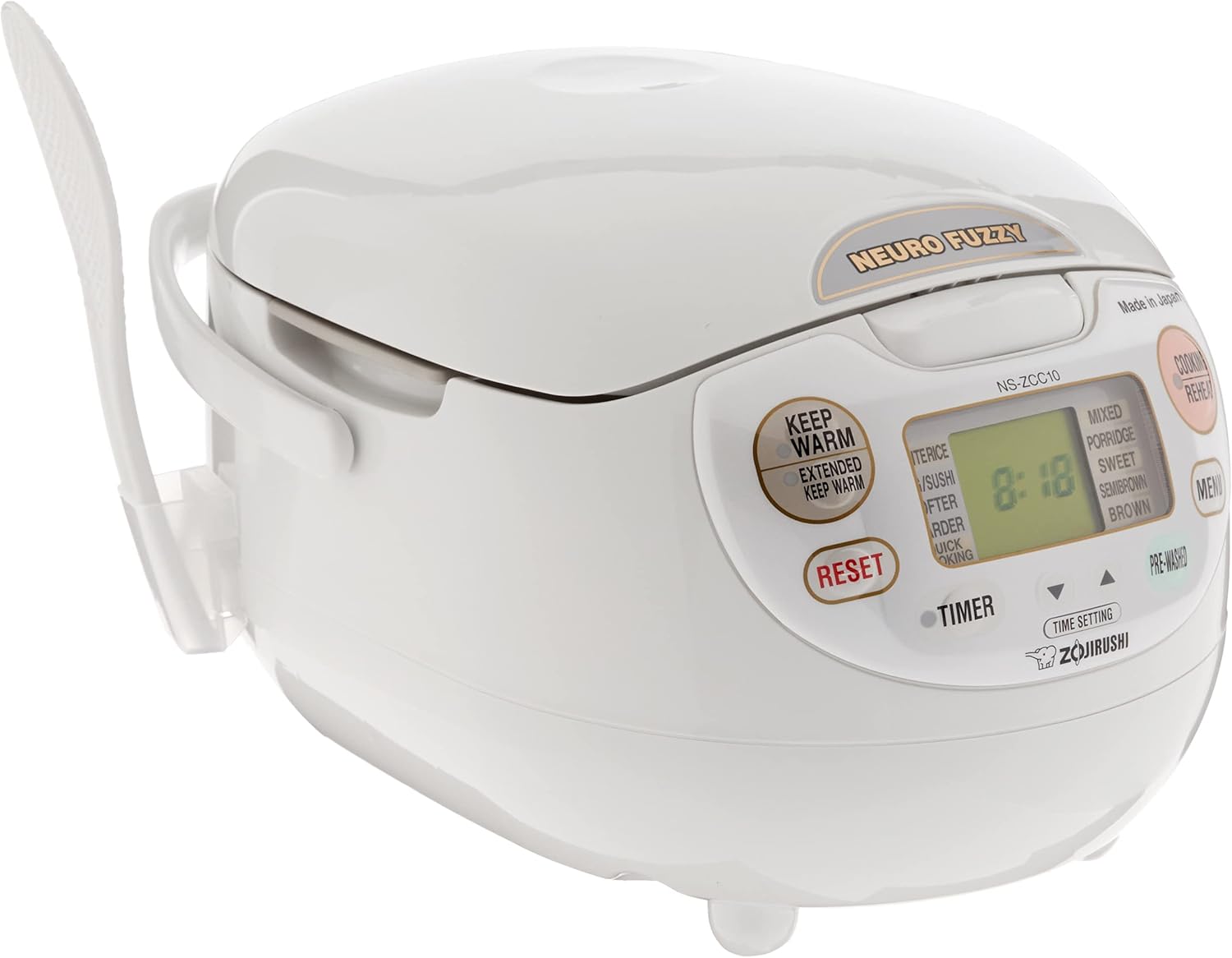
For perfect, restaurant-quality rice at home, you need a rice cooker with real fuzzy logic. After extensive testing, the Zojirushi NS-ZCC10 and Tiger JBV-A10U remain our top picks for 2026.
Ready to Upgrade Your Rice Game?
The Tiger JPW-H10U is waiting for you. Perfect rice, every time.
Buy on Amazon 🍚 🛒