
New Rice Cooker Smells Like Plastic? Why It Happens and How to Fix It
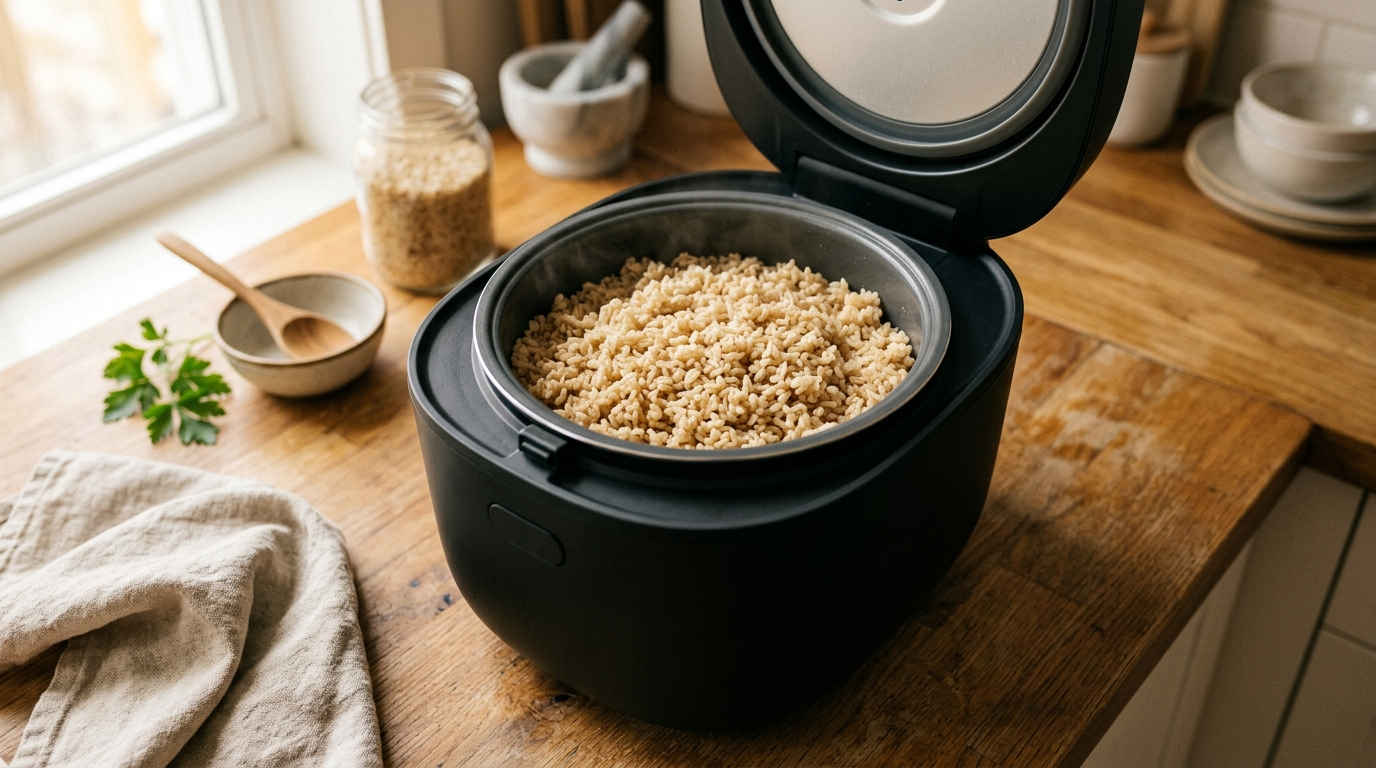
A plastic smell from a brand-new rice cooker is common and usually harmless off-gassing. Here is what causes it, whether it is safe, and the simple break-in routine that clears it before your first real batch of rice.
Open the box, plug in your shiny new rice cooker for the very first time, and — instead of the comforting steam of fresh rice — your kitchen fills with a warm, chemical, plasticky odor. Before you panic-box the appliance back up for a return, take a breath. A new-rice-cooker plastic smell is one of the most common first-use complaints owners report, and in the overwhelming majority of cases it is harmless, temporary, and easy to clear with a single cleaning cycle or two.
As an Amazon Associate we may earn a commission from qualifying purchases made through links on this page, at no extra cost to you.
Here is what is actually going on inside that new appliance, whether you need to worry about it, and the straightforward break-in routine that removes the smell before you cook your first real batch of rice.
Why Does a Brand-New Rice Cooker Smell Like Plastic?
The short answer is heat meeting fresh materials. Almost everything inside a rice cooker is being heated for the first time when you power it on, and a handful of components are the usual suspects.
It is rarely the inner pot doing the smelling. The food-contact inner pot is usually aluminum with a nonstick (PTFE) coating or, in some models, stainless steel — and those surfaces are not the main source of a plastic odor. The smell almost always comes from the surrounding parts: the removable inner lid, the rubber or silicone steam-vent gasket and sealing ring, the little plastic steam-vent cap, and the polycarbonate measuring cup and steam tray that often ship tucked inside the pot.
New plastics and rubbers off-gas when first heated. Brand-new polymers and silicone seals release residual volatile organic compounds (VOCs) the first few times they get hot. This is the same chemistry behind the “new car” smell or the odor of a fresh vinyl shower curtain. The U.S. Environmental Protection Agency notes that VOCs are emitted by a wide range of common household products and materials, and that concentrations can be noticeably higher indoors than out — which is exactly why that first cook cycle smells so strong in a closed kitchen (EPA — Volatile Organic Compounds Impact on Indoor Air Quality).
Manufacturing residues are a factor, too. Molding-release agents, light factory oils, and packaging dust can cling to the inner pot, the underside of the lid, and the heating plate during assembly and shipping. The first heat cycle volatilizes those residues, and your nose picks them up.
The nonstick coating is also “curing.” A brand-new PTFE coating can give off a faint odor the first time it is brought up to temperature as any residual manufacturing oils burn off. This is a one-time effect, not something that recurs after the break-in period.
Packaging traps odors. Foam inserts, plastic bags, and cardboard sit against the appliance for weeks in transit and in a warehouse. The warm cooker then releases those trapped smells back into the air.
None of this means the appliance is defective. It is the predictable first-use signature of a complex plastic-and-metal appliance being heated for the first time.
Is the Plastic Smell Actually Safe?
For the vast majority of new rice cookers, yes — the smell is a nuisance, not a health hazard.
The plastics used in food-contact components of small appliances sold in the U.S. are required to be food-grade, and today’s major brands (Zojirushi, Cuckoo, Tiger, Toshiba, and others) advertise BPA-free inner lids, measuring cups, and accessories. The U.S. Food and Drug Administration regulates the materials that come into contact with food and maintains that current approved uses of bisphenol A (BPA) in food packaging and food-contact applications are safe at the levels consumers are exposed to (FDA — Bisphenol A (BPA): Use in Food Contact Application).
The smell itself is mostly VOC off-gassing from those food-grade components. At the low levels produced by a single household appliance breaking in, it is an odor problem rather than a toxicological one. The sensible response is the same one the EPA recommends for any new-product off-gassing: ventilate. Run the break-in cycle under a running range hood or an open window, and the odor dissipates quickly.
A few honest caveats:
- If you have chemical sensitivities, asthma, or are pregnant, treat even nuisance odors more carefully. Do the initial cleaning cycles in a well-ventilated room, near an open window, and leave the room while it runs.
- Strong odor during the first one to three uses is expected. It should get noticeably weaker with each cycle.
- The important question is not “is there a smell” but “is the smell changing character.” A mild plasticky smell that fades is normal; a sharp, acrid, burning-electronics smell is not. We cover that distinction below.
How to Get the Smell Out Before You Cook Rice
Every rice cooker’s instruction manual tells you to clean the appliance before first use — and the manufacturers are right. A single conditioning cycle removes most of the odor so that your first actual batch of rice tastes like rice, not like the factory. Here is the routine that works, drawn from the consensus of owner experience and standard manufacturer guidance.
- Unbox and remove everything. Take out the inner pot, the inner lid (if yours is removable), the steam-vent cap and gasket, the measuring cup, the rice paddle, and the steam tray. These accessories are usually the biggest odor sources, and they all need washing.
- Hand-wash all removable parts. Use warm water and a mild dish soap with a soft sponge. Never use abrasive scrubbers or steel wool on a nonstick inner pot — they will scratch the coating.
- Run a vinegar-water boil cycle. Fill the inner pot with roughly one part white vinegar to three or four parts water, enough to sit just below the max line. Close the lid and run one full “Cook” cycle, then let it sit on Keep Warm for 15–20 minutes. The mild acid neutralizes odors and helps lift factory residues from the lid and vent as the steam circulates. Discard the liquid and rinse.
- Follow up with baking soda if the smell lingers. Dissolve a tablespoon of baking soda in a full pot of water and run another cycle. Baking soda absorbs odors rather than masking them.
- Try lemon as a pleasant alternative. A few slices of fresh lemon simmered in a pot of water does the same deodorizing job and leaves a cleaner scent.
- Wipe down the heating plate and the inside of the outer lid with a barely damp cloth. Gently clean the steam vent channel and the rubber gasket. Never submerge the main cooker body — it contains the heating element and electronics, and water inside the base will ruin it.
- Air it out. Leave the lid fully open for several hours, or overnight, so any remaining VOCs can dissipate rather than re-concentrate.
- Repeat once or twice if needed. Stubborn odors from a heavy silicone seal sometimes take a second vinegar cycle to fully clear.
For the full maintenance routine — including how to clean the gasket and vent without damaging them — see our complete guide on how to clean a rice cooker properly.
Season the Inner Pot While You Are at It
Since you are already running conditioning cycles, this is the perfect moment to season the inner pot. A thin film of cooking oil wiped across the nonstick surface and briefly heated conditions the coating, helps it perform better over its lifespan, and can muffle any last trace of odor. The technique is simple but worth doing correctly — our step-by-step covers it in how to season your rice cooker inner pot.
When the Smell Signals a Real Problem
Most new-cooker odors fade within the first two or three uses. A handful of warning signs, though, mean you should stop and investigate rather than push through another cycle.
Treat it as a red flag if:
- The smell is acrid — like burning electronics or burning rubber — and it is coming from the base or body of the cooker, not from the lid accessories.
- You see smoke, discoloration, or melting on the power cord, the plug, the outlet, or any plastic part.
- The smell is paired with a tripped breaker, a flickering unit, or sparking.
- The cooker will not turn on at all, or shuts itself off mid-cycle. (See our rice cooker not turning on troubleshooting.)
- The plastic or chemical smell persists, completely unchanged, after four or five full cleaning cycles and normal cooking — by that point a legitimate break-in odor should be gone.
- You spot visible damage to the inner-pot coating or scorching on the heating plate.
For a genuine electrical or burning smell: unplug the cooker immediately, do not use it again, and contact the manufacturer’s customer service or start a return. A burning-electronics odor is never a normal break-in issue, and it is not something a vinegar cycle will fix.
One related but separate problem: if the burning smell is coming specifically from the bottom during normal cooking rather than from new components, that points to a different cause entirely — usually rice or starch scorching on the heating plate or inner pot. Our guide on why rice cookers burn the bottom walks through those fixes. For the broader rundown of odd smells and symptoms, the rice cooker troubleshooting guide is a good next stop.
Want to Avoid the Smell Next Time? Pick a Low-Plastic Cooker
If you are sensitive to odors or simply prefer fewer heated-plastic and nonstick parts in your kitchen, two categories of rice cooker minimize the break-in smell at the source:
- Stainless-steel inner-pot cookers have no nonstick coating and no plastic food-contact surface, removing two of the biggest odor contributors. See our roundup of the best stainless steel rice cookers (browse on Amazon).
- Ceramic inner-pot cookers use an inert ceramic bowl with no PTFE, which is a popular pick for readers who want a non-toxic surface. Compare options in our ceramic rice cooker and broader non-toxic rice cookers guides.
A fair caveat: even stainless and ceramic models still have some rubber and plastic in the lid seal and steam vent, so a light break-in cycle is still worthwhile — but the food-contact surface itself will not be adding any smell.
If you would rather stick with a mainstream fuzzy-logic cooker, owner reviews frequently cite the Zojirushi Neuro Fuzzy line (the NS-ZCC10 and induction-heating NP-HCC10) for relatively mild, quickly fading first-use odor. You can compare the two directly in our NP-HCC10 vs NS-ZCC10 guide.
Frequently Asked Questions
Is it normal for a new rice cooker to smell like plastic? Yes. A mild plasticky or chemical smell during the first one to three uses is one of the most commonly reported first-use experiences, and it comes from new plastics and silicone seals off-gassing when heated for the first time. It should fade with each cycle.
Can I just cook rice in it right away if it still smells? You can, but the rice will likely pick up the odor and taste slightly off. A single vinegar-water cycle before your first real cook is quick, cheap, and worth it.
Is the smell toxic? The food-contact components are food-grade and, from major brands, BPA-free; the smell is mostly low-level VOC off-gassing rather than a toxic exposure at household scale (FDA on BPA, EPA on indoor VOCs). Ventilate during the break-in, and if you have respiratory sensitivities, run those cycles near an open window.
How many cleaning cycles until the smell is gone? Usually one to three. A single vinegar-water cycle clears the majority; a stubborn heavy gasket may need a second cycle plus an overnight airing.
Should I return it? Only if the smell is a sharp burning-electronics or burning-rubber odor, if you see smoke, melting, or cord damage, or if a strong plastic smell persists unchanged after several cleaning cycles. Those point to a genuine defect, not a normal break-in.
The Bottom Line
A plastic smell from a new rice cooker is almost always ordinary off-gassing from brand-new heated components — the lid seal, steam vent, and accessories doing their one-time chemistry. One or two vinegar-water cleaning cycles, a wipe-down of the heating plate and vent, and an overnight airing will almost always clear it before your first real batch of rice. Save the returns and the customer-service calls for the rare case where the smell is acrid, electrical, or accompanied by smoke — because that, and not the faint plasticky new-appliance smell, is the one worth worrying about.
Related Articles
Zojirushi Rice Cooker Error Codes: What H, C, and E Displays Mean and How to Fix Them
Real Zojirushi error codes from six official manuals: H01-H05 sensor overheat with per-model cool-down times, C-series pressure faults, E01/E02 service calls, the blinking clock battery, and what you can fix at the counter.
rice-cooker-maintenanceZojirushi Neuro Fuzzy Rice Cooker Review (NS-ZCC10): Still the Benchmark in 2026
A research-based review of the Zojirushi NS-ZCC10 Neuro Fuzzy rice cooker: how its fuzzy-logic micom controller actually works, what owner reviews consistently praise, where it falls short, and who should buy one in 2026.
rice-cooker-maintenanceTiger Rice Cooker Review (2026): How the JBV-A10U Tacook Earns Its Counter Space
A research-based look at Tiger's JBV-A10U-W Tacook rice cooker: how synchro-cooking works, what owners report about brown rice, congee and everyday white rice, how Tiger compares with Zojirushi and Cuckoo, and who should buy it.