
Tiger Rice Cooker Review (2026): How the JBV-A10U Tacook Earns Its Counter Space
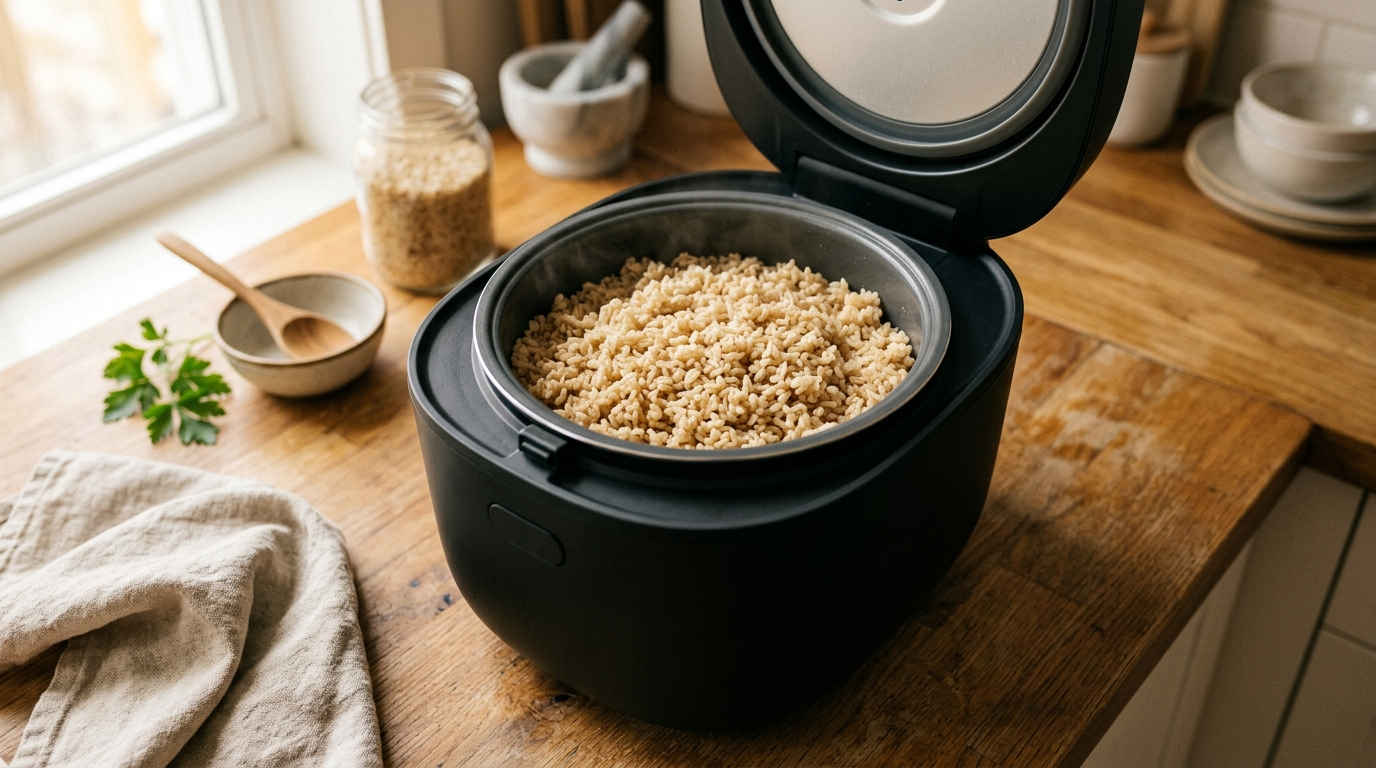
A research-based look at Tiger's JBV-A10U-W Tacook rice cooker: how synchro-cooking works, what owners report about brown rice, congee and everyday white rice, how Tiger compares with Zojirushi and Cuckoo, and who should buy it.
As an Amazon Associate we may earn a commission from qualifying purchases made through links on this page, at no extra cost to you.
First, what this article is — and isn’t
This is a research synthesis, not a hands-on test report. Everything below is compiled from Tiger’s own product documentation and Tiger Corporation’s official global site, the retailer listings for the model we recommend, and the recurring themes in verified owner feedback across major retailers and long-running community discussions. Where a claim comes from Tiger’s marketing, we say so. Where owners disagree, we say that too. No bench testing, no timed cooks, no invented scores.
Why Tiger is one of the three names worth knowing
Tiger Corporation is a Japanese appliance maker founded in 1923, and it sits alongside Zojirushi and Cuckoo in the small group of brands that rice-focused communities treat as the default shortlist. That reputation rests on two things: decades of thermos and thermal-jar engineering, which is the same insulation and temperature-control logic a rice cooker depends on, and a model lineup that spans basic one-switch cookers through Micom (microcomputer-controlled) machines.
Tiger’s distinctive trick, though, is Tacook — and it’s the single biggest reason to pick Tiger over the other two brands for everyday family cooking. We have a full three-way breakdown in our Cuckoo vs Zojirushi vs Tiger comparison, and a deeper two-way analysis in Zojirushi vs Tiger, but the short version is: Zojirushi chases peak rice texture, Cuckoo chases pressure-driven speed and GABA brown rice, and Tiger chases practical whole-meal convenience.
The model most people should buy: JBV-A10U-W
For most households the sweet spot in Tiger’s US lineup is the JBV-A10U-W, a 5.5-cup (uncooked) Micom machine that yields roughly 11 cups cooked per the product listing — enough for a family dinner plus leftovers. It’s a long-running model that has stayed in Tiger’s lineup for years, which matters more than it sounds: parts, the nonstick inner pot, and the Tacook plate remain easy to find, and years of accumulated owner feedback mean its quirks are well documented rather than hypothetical. If 5.5 cups sounds like too much or too little, our rice cooker size guide walks through matching capacity to household size, and singles living alone may be better served by something from our small rice cooker for one person roundup.
In the box you get the nonstick inner pot, the Tacook plate, a rice spatula, and a measuring cup — and note that the cup is the standard rice-industry 180 ml cup, not a US 240 ml cup. That trips up nearly every first-time buyer, and it’s the most common source of “my rice came out wrong” complaints. Our rice cooker cup size explainer covers the conversion math.
Tacook: the feature that justifies the brand choice
Tacook (Tiger’s “synchro-cooking”) is the headline feature. You put rice and water in the inner pot as usual, place the shallow Tacook plate on top of the pot, load a protein-and-vegetable dish onto the plate, close the lid, and press the synchro-cooking menu. The machine cooks both in the same cycle: steam rising off the rice cooks the dish above it, and Tiger’s design keeps the two from transferring flavors, so your rice doesn’t taste like the teriyaki chicken sitting above it.
The practical payoff is one button producing a complete meal in roughly a single rice-cook cycle, with no stovetop pan to wash. Owner feedback on this feature is consistently positive — it’s the reason many buyers chose Tiger in the first place, and the reason they’d rebuy. The honest caveats: the plate is shallow, so dishes are necessarily simple (think salmon and greens, curried vegetables, sliced sausage rather than a whole stir-fry), and the timing is dictated by the rice, so delicate proteins can overcook if the rice cycle runs long. For deliberate, timed steaming of larger batches, our rice cooker steaming guide covers the workflow with a standard steamer basket.
Menus, Micom, and what the settings actually do
The JBV-A10U is a Micom cooker: a microcomputer runs the cook program, adjusting temperature and cook time based on the menu selected rather than a simple thermostat clicking off at a set point. The menu set covers plain, synchro-cooking, brown, sweet, mixed, porridge and oatmeal, plus steaming. If you’re fuzzy (sorry) on what separates Micom from fuzzy logic and Neuro Fuzzy, our fuzzy logic vs Micom explainer breaks down the differences without the marketing fog.
Two menus deserve specific comment:
Brown rice. The dedicated brown menu runs a longer, hotter soak-and-cook cycle that owner feedback describes as reliable for standard long-grain and short-grain brown rice. It’s genuinely good — but Tiger’s brown-rice ceiling is lower than Zojirushi’s or Cuckoo’s premium machines, which use induction or pressure to reach a different level of texture. If brown rice is the majority of what you cook, read our best rice cookers for brown rice guide before committing.
Porridge/congee. Congee is where Micom menus earn their keep — a stovetop congee needs stirring and watching, while the porridge menu holds a gentle bubble unsupervised. Owners report good results, with the usual rice-cooker congee caveat that the bottom can catch if you max out the capacity. Our best rice cooker for congee guide compares the leading options side by side.
How Tiger compares with Zojirushi and Cuckoo
The honest one-paragraph summary of years of owner consensus: on plain white rice alone, a premium Zojirushi (induction, Neuro Fuzzy) produces noticeably better texture — more distinct grains, better bottom-of-pot results — and pressure Cuckoo machines produce softer, stickier Korean-style rice faster. Tiger’s JBV-A10U sits a step below both on peak texture but costs considerably less than the premium models, and nothing else at its price does whole-meal synchro-cooking. Our head-to-head pieces — Cuckoo vs Tiger and the Zojirushi vs Tiger showdown — go into the details, including keep-warm behavior, where Zojirushi’s extended keep-warm is a real advantage for all-day households.
Who should skip it
Three groups should look elsewhere. If you want the absolute best white rice and budget allows, go induction — start with our best induction rice cookers roundup. If you cook a lot of brown rice, want GABA cycles, or need speed, a pressure model from our best pressure rice cooker guide fits better. And if you’re specifically avoiding nonstick coatings, the JBV-A10U’s fluorocoated pot is a dealbreaker — see our non-toxic rice cookers roundup for PFAS-free alternatives.
Keep-warm safety and everyday care
The JBV-A10U switches to keep-warm automatically after cooking, and Tiger positions it for holding rice at serving temperature. The food-safety rule that matters: cooked rice is a Bacillus cereus risk, and USDA guidance keeps cooked food out of the 40°F–140°F “danger zone” for more than two hours — hold rice hot, refrigerate leftovers promptly in shallow containers, and don’t hold rice on keep-warm for multiple days. Our how long can rice stay on keep warm guide covers the practical limits, and our rice storage guide covers cooling and refrigerating leftovers safely.
For cleaning: the nonstick pot wipes clean, and the Tacook plate and spatula are the parts that actually need regular attention, since cooked-on sauce is the main complaint in owner feedback. The full routine is in how to clean your rice cooker properly.
Frequently asked questions
What does Tacook mean on a Tiger rice cooker? It’s Tiger’s synchro-cooking system — a plate that sits above the rice pot so steam from the cooking rice prepares a second dish in the same cycle, started with one button.
Is the Tiger JBV-A10U good for brown rice? Yes for everyday brown rice via its dedicated menu. For brown-rice-first households, premium induction or pressure machines reach better texture; see our brown rice guide.
Tiger or Zojirushi — which should I buy? Zojirushi wins on peak white-rice texture and keep-warm; Tiger wins on price and whole-meal convenience via Tacook. The full comparison is in our Zojirushi vs Tiger guide.
Can it make congee? Yes — the porridge menu is one of the most-used settings among congee cooks, with the caveat not to overfill. Details in our congee guide.
What capacity do I need? The JBV-A10U’s 5.5 uncooked cups suit two to four people with leftovers; Tiger’s 10-cup sibling (JBV-A18U, search current pricing on Amazon) covers larger households and batch cooking.
Verdict
The Tiger JBV-A10U-W is the right pick when you want dependable Micom rice, a real brown-rice and congee menu, and — the differentiator — a second dish finished simultaneously with the rice from one button press. It won’t out-cook a premium Zojirushi on plain white rice, and it skips induction and pressure entirely, but at its street price the whole-meal convenience is unmatched, and years of owner feedback back that up. For most two-to-four-person households that eat rice regularly and weeknight-cook around it, it’s an easy recommendation.
Related Articles
Zojirushi Rice Cooker Error Codes: What H, C, and E Displays Mean and How to Fix Them
Real Zojirushi error codes from six official manuals: H01-H05 sensor overheat with per-model cool-down times, C-series pressure faults, E01/E02 service calls, the blinking clock battery, and what you can fix at the counter.
rice-cooker-maintenanceZojirushi Neuro Fuzzy Rice Cooker Review (NS-ZCC10): Still the Benchmark in 2026
A research-based review of the Zojirushi NS-ZCC10 Neuro Fuzzy rice cooker: how its fuzzy-logic micom controller actually works, what owner reviews consistently praise, where it falls short, and who should buy one in 2026.
rice-cooker-maintenanceCuckoo Rice Cooker Error Codes: What the Display Means and How to Fix Each
Every Cuckoo error display decoded: the official code table from Cuckoo's own manual library, what each one means for your model series, the fixes you can do at the counter, and when to call service.