Best Pressure Rice Cooker for 2026: Cuckoo and Zojirushi Picks
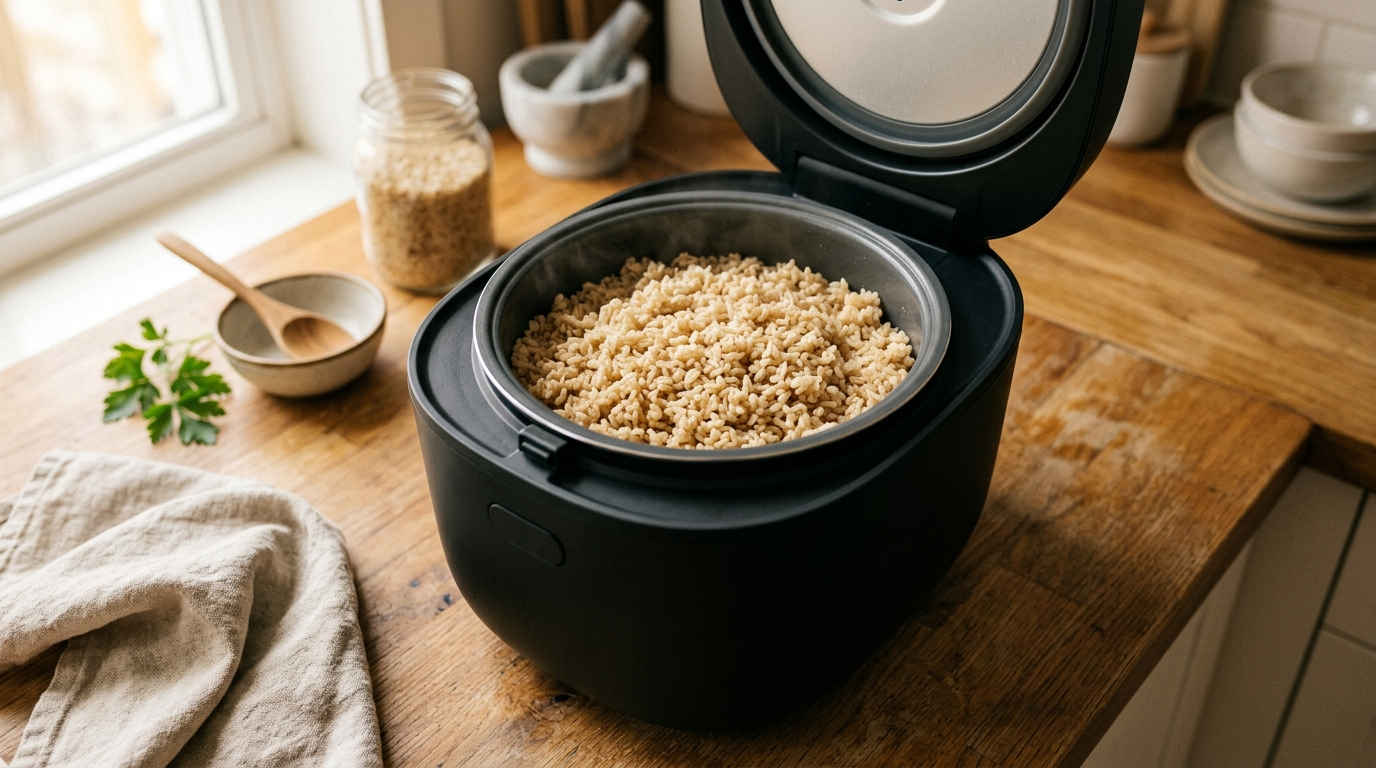
Pressure rice cookers seal the pot to cook under raised pressure, often pairing induction heating with fuzzy-logic control for softer, evenly hydrated grains. This guide compares five Cuckoo and Zojirushi models by capacity and menu depth, using manufacturer specs and owner reviews rather than first-hand lab testing.
Best Pressure Rice Cooker for 2026: Cuckoo and Zojirushi Picks
This desk does not run a product test fleet. What follows is Cuckoo America and Zojirushi published menus, live ASINs this site already uses, and owner-consensus research — not a pressure-lid diary and not a recap of the Amazon title.
As an Amazon Associate we may earn a commission from qualifying purchases made through links on this page, at no extra cost to you.
A leftover draft of this page treated every CRP as interchangeable and hung a family pot on CRP-JHR1009F. The family twin-pressure cooker this site already reviews is the CRP-ST1009FG on B0B7Q6DF32. Match the stamp.
This page is pressure vs conventional Micom, then Cuckoo CRP twins vs Zojirushi NP. It is not a redo of the best Zojirushi buying guide, not a deepen of Cuckoo rice cookers, and not Instant Pot churn.

Pressure-IH vs conventional Micom
A standard Micom rice cooker reads temperature with a sensor and adjusts heat through a fuzzy-logic program, but the pot stays at atmospheric pressure. A pressure rice cooker adds a sealed lid and a controlled vent, so the water can get hotter than its normal boiling point before the cooker releases pressure and settles into an absorb phase. That higher temperature, plus the forced moisture penetration, is why cooked grains tend to come out softer and plumper, with less risk of a dried-out top layer.
Two heating methods sit inside the pressure tier:
- Conventional pressure uses a heated base under a sealed, non-induction pot. The CRP-P0609S is this desk’s live entry. Pressure without paying for a magnetic pot.
- Induction heating (IH) energizes the metal inner pot itself as the heating element. Cuckoo’s twin-pressure IH (LHTR) and Zojirushi’s NP-NWC sit here. The cost-benefit walkthrough is is an induction rice cooker worth it.
Skip-buy pressure if you mostly press White on short-grain a few nights a week. A CR-0655F already has GABA/brown without a gasket. A NS-ZCC10 or NS-TSC10 already does quiet Japanese white rice. Pressure is extra lid, extra vent starch, and extra voice (on most Cuckoos). Buy it when mixed grain, restaurant-sticky rice, or GABA-under-pressure is the weekly job.
Control-logic primer: fuzzy logic versus micom. Brand triangle: Cuckoo versus Zojirushi versus Tiger. Physics: pressure rice cookers explained.
A note on capacity: Cuckoo and Zojirushi both size their cookers by an included rice cup (roughly 6 oz / 180 ml), and they usually quote both an uncooked and a cooked figure. Amazon titles love the cooked number. A “12-cup” Cuckoo is usually 6 uncooked. Listing-check the uncooked class before you buy a family drum for a studio.
How to read the CRP / NP stamp
| You will see… | What it usually is | This desk’s listing-check |
|---|---|---|
| CRP-P0609S / “12-Cup High Pressure” | High-pressure, heated base, ~6 uncooked | ASIN B01JRTZVVM. Not induction. Not twin-pressure. |
| CRP-LHTR0609FW | Twin pressure plus IH, ~6 uncooked | ASIN B08DP4TGNN. Confirm FW + 120 V. |
| CRP-ST1009FG | Twin pressure, 10-cup class | ASIN B0B7Q6DF32. Not leftover B0BHMW3BQB. Not JHR1009F. |
| NP-NWC10XB | Zojirushi pressure-IH, 5.5-cup | ASIN B088FZXZHY. This site’s NP-NWC review. |
| NW-JEC10BA | Newer Zojirushi pressure-IH listing | ASIN B09N9Z183T. Same job class as NP-NWC. Do not buy both. |
| CR-0655F | Heating-plate Micom. No pressure. | ASIN B01MQWFGKG. Wrong aisle if you wanted a seal. |
The pressure keepers
Best value high-pressure — CUCKOO CRP-P0609S
ASIN B01JRTZVVM. Cuckoo America rates it at roughly 6 uncooked cups (about 12 cups cooked). High-pressure, heated base rather than induction, auto-clean, multi-language voice guidance (mutable on most US units — confirm the listing). Cuckoo America CRP-P0609S.
Owner consensus: white-rice texture and years-long reliability. Recurring complaints: voice, menu learning curve, and thick mixes cooking less evenly than on IH.
Buy this if you want a genuine pressure lid without paying for induction. Skip it if you cook delicate porridge and mixed grains that want a non-pressure mode — that is twin-pressure. Skip it if you only wanted Cuckoo menus: the CR-0655F is the Micom.
Twin-pressure IH — CUCKOO CRP-LHTR0609FW
ASIN B08DP4TGNN. Twin-pressure: high-pressure or a non-pressure (steamed) mode, plus induction. About 6 uncooked cups. Diamond-coated nonstick pot on Cuckoo’s copy. Voice navigation.
Buy this if you cook a real variety of grains and do not want everything forced through a high-pressure cycle. Skip it if you mostly make plain rice — P0609S already seals. Skip it if the pot has to feed a crowd — that is the 10-cup ST1009.
Family twin-pressure — CUCKOO CRP-ST1009FG
ASIN B0B7Q6DF32. This site’s CRP-ST1009FG review. Twin pressure, 10-cup uncooked class, Open Cooking on Cuckoo’s current copy. A leftover draft of this page named CRP-JHR1009F (B0BBPPLBWB) as the family IH-pressure pick. This desk uses the ST1009 already on the Cuckoo guide. Match ST1009FG, not a leftover JHR box.
Buy this for a household of four-plus, or anyone who meal-preps rice in quantity and wants a pressure lid. Skip it on a small counter — it will dominate. Family Micom without a seal is the CR-1020F, covered on the families guide this pass will not rewrite.
Zojirushi pressure-IH — NP-NWC10XB
ASIN B088FZXZHY. 5.5 uncooked cups. Zojirushi’s NP-NWC page: pressure plus induction, Umami, jasmine, GABA brown, platinum-infused nonstick (still a coated pot), three pressure levels by menu. Some cycles do not apply pressure — read the manual for the key you actually press.
Owner consensus: grain texture and keep-warm quality. Criticisms: premium price, slow Umami/GABA cycles, 5.5-cup ceiling.
Buy this if finished texture and GABA-under-pressure are why you left Neuro Fuzzy. Skip it if you will only press White — NS-ZCC10 or NP-HCC10. Full write-up: NP-NWC10 review. Worth-it math: is the Zojirushi worth it.
Newer Zojirushi listing — NW-JEC10BA
ASIN B09N9Z183T. Same 5.5-cup pressure-IH job class, newer housing and menu copy. Skip-buy a second Zojirushi pressure-IH if you already decided on NP-NWC. This desk’s reviewed keeper is the NP-NWC. Confirm the live stamp; do not treat NW-JEC and NP-NWC as flavor options you need both of.

Cuckoo CRP twins vs Zojirushi NP
| Question | Cuckoo CRP | Zojirushi NP-NWC |
|---|---|---|
| Pressure without IH | CRP-P0609S | No cheap pressure Zojirushi on this shortlist |
| Pressure or non-pressure | Twin-pressure LHTR / ST1009 | Menu-picked pressure levels; some keys stay unpressurized |
| Quiet white-rice curve | Voice + vent noise is normal | Usually quieter; slower soak-and-rest culture |
| 10-cup family seal | CRP-ST1009FG | NP-NWC18 exists; this page’s reviewed ASIN is the 5.5-cup |
| GABA / Umami copy | GABA/brown on CRP menus | Named Umami + GABA brown on Zojirushi’s NP page |
| First Japanese white rice | Wrong aisle — best Zojirushi | NS-ZCC10 / NS-TSC10, not pressure |
Tiger stays Micom + Tacook unless you leave this aisle. Frozen title, do not retitle: TIGER JBV-A10U Review: 5.5-Cup Micom With Synchro-Cooking.
Who should skip pressure
| Your actual job | Buy | Skip-buy |
|---|---|---|
| Occasional white rice | NS-ZCC10 / NS-TSC10 / CR-0655F | Any CRP “because Korean” |
| GABA brown without a gasket | NL-GAC10 or NP-HCC10 — brown rice guide | NP-NWC money for a soak you will cancel |
| One or two people, small counter | P0609S or LHTR, or a 3-cup Micom | ST1009 family drum — small one-person guide |
| Coating-free pot | Not this aisle — non-toxic rice cookers | Platinum / diamond marketing as “stainless” |
| Speed + many other jobs | Existing brief Instant Pot mention only | This page will not expand Instant Pot ASINs |
On cleaning: nonstick inner pots are standard across these keepers. The long-term owner factor is the gasket and steam path, not the GABA marketing line. How to clean a rice cooker.
Pressure rice cooker FAQ
Do pressure rice cookers actually cook faster? Pressure raises the cooking temperature and speeds starch gelatinization, but the full cycle (presoak, pressure, absorb, keep-warm) can still take a while on Umami or GABA brown. The real advantage is texture and consistency, not always raw speed.
Is pressure rice healthier? The GABA brown-rice setting on the Zojirushi NP and some Cuckoo units is a long warm hold the manufacturers describe as germination. This desk does not publish a nutrition lab. Nutritionally, pressure cooking and conventional cooking produce broadly comparable rice.
How long can rice stay on keep-warm? Keep-warm is a convenience, not indefinite storage. Cooked rice can harbor Bacillus cereus. FoodSafety.gov and other food-safety authorities recommend refrigerating leftover rice promptly (within about two hours). Keep-warm safety.
Pressure rice cooker or a multicooker? Multicookers can pressure-cook rice and do other jobs. Dedicated pressure rice cookers keep rice-specific menus. This pass will not deepen Instant Pot pages or add Instant Pot ASINs. The existing comparison stays on rice cooker versus Instant Pot.
The bottom line
Editorial read of the stamps, not a pressure-scoreboard: CRP-P0609S is the sensible sealed-lid entry. CRP-LHTR0609FW is twin-pressure plus IH in a 6-cup body. CRP-ST1009FG on B0B7Q6DF32 is the family twin this site already reviews — not a leftover JHR1009F. NP-NWC10XB is the Zojirushi pressure-IH keeper. Skip pressure if you will only press White.
Check the CRP-P0609S on Amazon → · Check the NP-NWC10 on Amazon →
Related pages
Related Articles
Is an Induction Rice Cooker Worth It? A Practical Cost-Benefit Analysis
Induction heating rice cookers cost 2-3x more than standard models. We analyze whether the improved rice quality, energy efficiency, and durability justify the premium for different types of buyers.
buying-guidesBest Large-Capacity Rice Cooker (2026): Top Big-Batch Picks
Need a rice cooker that feeds a crowd? These large-capacity picks from Aroma and Tiger all sit near the 10-cup-uncooked class. Here is how to compare capacity, features, and honest owner consensus.
buying-guidesBest Rice Cooker for Sushi Rice: Top 5 Picks for Perfect Shari
Sushi rice demands exact texture — firm, glossy, and slightly sticky. We researched rice cookers specifically for sushi rice and ranked the 5 best models for home sushi making.