
Best Large-Capacity Rice Cooker (2026): Top Big-Batch Picks
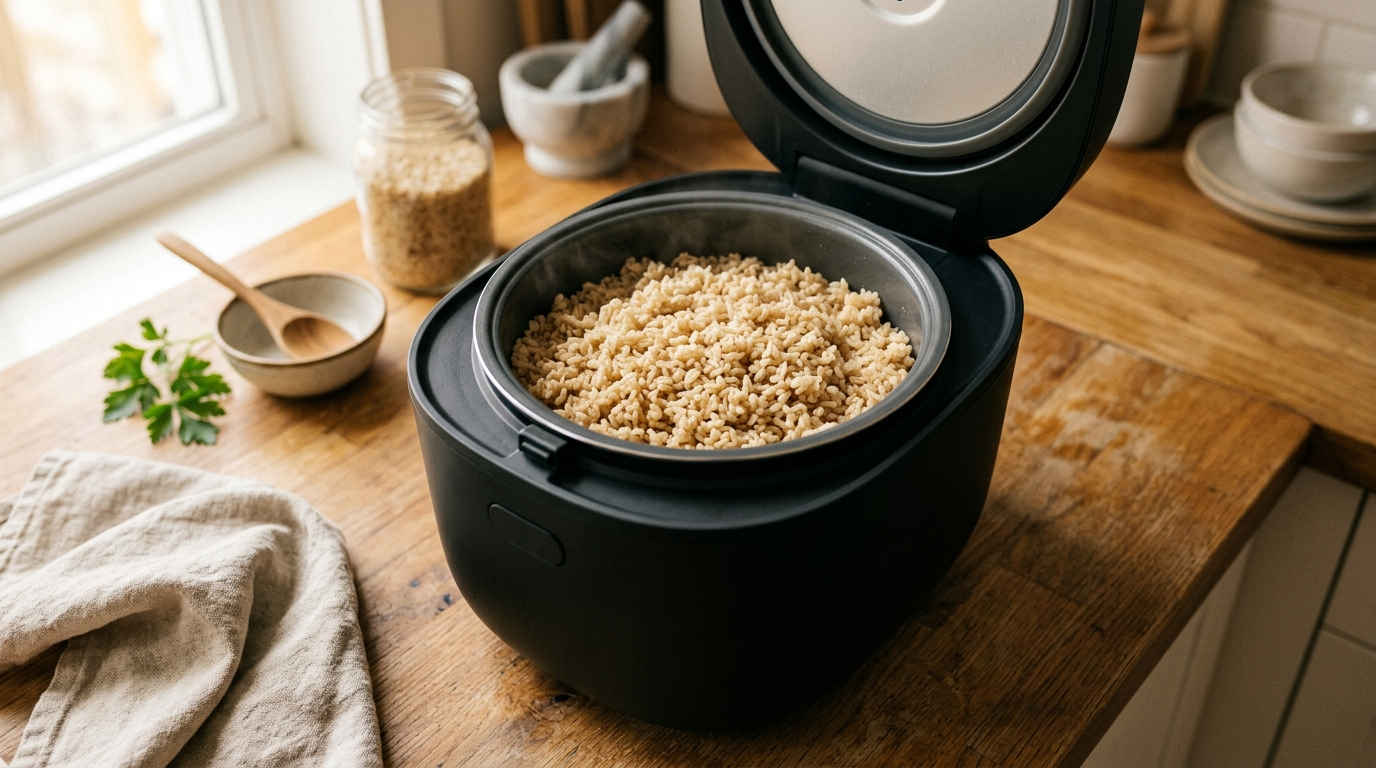
Need a rice cooker that feeds a crowd? These large-capacity picks from Aroma and Tiger all sit near the 10-cup-uncooked class. Here is how to compare capacity, features, and honest owner consensus.
Best Large-Capacity Rice Cooker (2026): Top Big-Batch Picks
When you are feeding a family, batch-cooking for the week, or hosting a gathering, a compact 3-cup cooker simply cannot keep up. A large-capacity rice cooker makes enough rice in a single cycle for everyone at the table — and a good one does it consistently, without scorching the bottom or turning out gummy, overcooked grains.
This guide compares four widely available large-capacity picks from Aroma and Tiger, explains how rice-cooker capacity actually works (the labels are more confusing than they should be), and walks through how to choose the right model for your kitchen. For each pick we combine manufacturer specifications with the consensus of verified owner reviews across major retailers. This is research-based reporting, not hands-on lab testing — we did not cook in every unit, and we have not invented any ratings, measurements, or quotes.
As an Amazon Associate we may earn a commission from qualifying purchases made through links on this page, at no extra cost to you.
How rice-cooker capacity actually works
Before looking at any model, two conventions trip up almost every first-time buyer.
1. A rice-cooker “cup” is not a standard U.S. cup. The measuring cup that comes with a rice cooker is typically a 6-ounce (roughly 180 ml) measure, smaller than a standard 8-ounce U.S. cup. Capacity ratings are based on these smaller cups, which is why a “10-cup” cooker holds more than you might expect.
2. Some brands rate capacity by cooked rice, others by uncooked rice. This is the single most important thing to understand on this page:
- Aroma rates its large cookers by cooked yield. A “20-Cup” Aroma model produces about 20 cups of cooked rice from roughly 10 cups of uncooked rice.
- Tiger rates its large cookers by uncooked input. A “10-Cup” Tiger model takes 10 cups of uncooked rice and yields roughly 20 cups cooked.
The practical upshot: all four cookers in this guide sit in roughly the same large-capacity class — about 10 cups uncooked, or roughly 20 cups cooked. They are labeled differently, not sized differently. When you shop, always check whether the number refers to raw or cooked rice so you compare like with like. (Our dedicated rice cooker size guide goes deeper on matching capacity to your household.)
That class — around 10 cups uncooked — is enough cooked rice for a large family dinner, a potluck contribution, or two to three days of meal-prep portions in one cycle.
The best large-capacity rice cookers (2026)
1. AROMA 20-Cup One-Touch Rice Cooker — best simple, budget-friendly big batch
Best for: Anyone who wants the largest possible batch with the fewest possible buttons — big families, community dinners, church or team gatherings, and people who want to press one switch and walk away.
Key specs: Rated for up to 20 cups cooked (about 10 cups uncooked); single one-touch lever that shifts automatically from cook to keep-warm; nonstick removable inner pot; included steam tray for vegetables, fish, or dumplings while the rice cooks below.
What owners say: Verified buyers consistently praise the sheer volume for the price, the dead-simple operation, and the steam tray as a genuinely useful bonus. The recurring complaints are the flip side of “simple”: there is no delay timer, the keep-warm mode can dry out the bottom layer over very long stretches, and a full pot of starchy short-grain rice can sputter at the steam vent. For a no-frills workhorse at this volume, it is hard to beat on value.
2. AROMA 20-Cup Digital Rice Cooker — best for meal prep with a timer
Best for: Meal preppers, shift workers, and hosts who want to load the pot in the morning and have rice ready on a schedule. If “set it and forget it” matters more than raw simplicity, this is the Aroma to get.
Key specs: Same ~20-cup cooked (10-cup uncooked) class as the one-touch version; digital control panel; programmable delay timer for scheduling a cook to finish later; multiple settings including white rice, brown rice, steam, and slow-cook; nonstick inner pot and steam tray included.
What owners say: The delay timer is the feature owners highlight most — being able to wake up or come home to freshly finished rice is a real convenience at this capacity. Reviewers also like having dedicated white- and brown-rice settings in one machine. The downsides owners mention: the footprint is large, the digital buttons take a cycle or two to learn, and a few report that very full loads of certain grains cook slightly less evenly than in a basic cooker. Overall it is the stronger pick when programmability matters.
3. Tiger JNP-S18U-KY 10-Cup Rice Cooker — best durable, conventional Japanese-brand cooker
Best for: Buyers who prioritize long-term durability and consistent, no-surprises rice over digital features. This is the pick for someone who wants a cooker that still works a decade from now.
Key specs: 10-cup uncooked capacity (about 20 cups cooked) in Tiger’s conventionally heated lineup; single-switch operation with automatic keep-warm; nonstick inner pot; retractable power cord; carrying handle for moving a full pot to the table.
What owners say: Tiger’s conventional cookers are legendary among owners for durability and longevity, and the JNP series earns consistent praise for turning out reliably cooked white rice cycle after cycle. The trade-offs are exactly what you would expect from a conventional, single-function machine: there is no delay timer or multi-grain programming, the unit is heavy, and it does one job rather than several. If your definition of “best” is “still making great rice in 2035,” this is the one.
4. Tiger JBV-A18U 10-Cup Micom Rice Cooker — best multi-function large cooker
Best for: Large households that want one appliance to handle rice and a main dish. This is the most versatile pick on the list, and the one that earns its counter space for busy families.
Key specs: 10-cup uncooked capacity (about 20 cups cooked); microcomputer (micom) controls that adjust heat and timing automatically; a four-in-one function set covering plain rice, slow cook, steam, and Tiger’s “synchro-cooking” (sometimes called tacook), which cooks rice and an accompanying dish in the upper tray at the same time using the same steam cycle; nonstick inner pot; retractable cord.
What owners say: The standout feature for owners is synchro-cooking — being able to finish a pot of rice and a complete topping or stew simultaneously saves real time on weeknights, and the micom logic produces noticeably more consistent results across batches than a basic cooker. The caveats: this is not an induction model, so it will not match the texture of premium induction-heating cookers (see our neuro fuzzy vs micom rice cooker breakdown for the difference), and the larger footprint demands serious counter space. For versatility at high volume, it is the strongest all-rounder here.
How to choose a large-capacity rice cooker
Pick the capacity by how you actually cook, not the headline number. Around 10 cups uncooked (roughly 20 cooked) is the sweet spot this guide focuses on, but if you regularly cook for very large groups or run a small food operation, consider stepping up; if it is mostly a household of four with occasional guests, this class is plenty. Always leave headroom — starchy grains and foamy rices need space, and overfilling is a common cause of messy boil-overs.
Decide between conventional, micom, and fuzzy/induction heating. Conventional cookers (like the two Tiger options here differ — the JNP is conventional, the JBV is micom) use a simple thermostat. Micom adds a microcomputer that fine-tunes heat and timing for more consistent results and extra programs. Fuzzy-logic and induction-heating models go further still, at a higher price. If you want the detail on where the line falls, our fuzzy logic vs micom and induction rice cooker guides cover it.
Match features to your routine. A delay timer is worth its weight in gold for meal prep and shift workers but unnecessary if you cook on demand. A steam tray turns a rice cooker into a two-course machine for very little money. Synchro-cooking (on the Tiger JBV) is the biggest lifestyle upgrade if you want entire meals from one appliance.
Weigh brand reliability. Tiger has a strong reputation for conventional-cooker durability; Aroma competes aggressively on features-per-dollar. Our Cuckoo vs Zojirushi vs Tiger rice cooker comparison puts these brands head to head if you want to look beyond this shortlist. For families specifically, see our best rice cookers for families roundup.
Don’t overlook cleaning at this scale. A 20-cup cooker makes a lot of rice — and a lot of starchy residue. Removable, nonstick, dishwasher-friendly inner pots and steam trays matter far more at this size than on a small cooker. Our how to clean a rice cooker guide walks through keeping a big pot in good shape.
FAQ
How many people will a 10-cup (uncooked) rice cooker feed? About 20 cups cooked is roughly 10 to 20 servings depending on portion size — easily a large family dinner, with leftovers for the next day, or enough for a small gathering in one cycle.
Aroma says “20-Cup” and Tiger says “10-Cup” — are these different sizes? No. In this guide they are the same class: roughly 10 cups uncooked / 20 cups cooked. Aroma advertises cooked yield; Tiger advertises uncooked input. Read the label carefully before comparing.
Can these large cookers handle brown rice? Yes — brown rice is a whole grain that keeps its bran and germ and simply needs more water and a longer cycle than white rice (USDA FoodData Central). The digital Aroma and the micom Tiger handle this more gracefully because they have dedicated settings; conventional cookers can do it but may need a manual extra water and a second cycle. See our how to cook brown rice in a rice cooker guide for ratios and timing.
Is it safe to leave rice on keep-warm all day? Only within reason. Cooked rice can harbor Bacillus cereus, a bacterium whose heat-stable toxins are the reason rice should not sit at room temperature for long (FDA Bad Bug Book). A cooker’s keep-warm mode holds rice above the danger zone, but quality and safety both decline over many hours. Our keep-warm safety guide covers how long is reasonable.
The bottom line
For most people shopping the large-capacity class, the choice comes down to features versus durability:
- Want the simplest big batch for the lowest price? Go one-touch with the AROMA 20-Cup One-Touch Rice Cooker.
- Want programmability and a delay timer for meal prep? Choose the AROMA 20-Cup Digital Rice Cooker.
- Want a durable, conventional cooker that lasts? Pick the Tiger JNP-S18U-KY 10-Cup Rice Cooker.
- Want the most versatility at high volume? The Tiger JBV-A18U 10-Cup Micom Rice Cooker is the all-rounder.
Whatever you choose, buy on capacity class (around 10 cups uncooked / 20 cooked), confirm whether the rating is cooked or raw, and pick the feature set that matches how you actually cook. That is the difference between a big cooker that gathers dust and one that earns its counter space every week.
Related Articles
Panasonic Rice Cookers: Which Model Fits Your Kitchen?
A research-desk guide to Panasonic rice cookers: which US models are actually current, what each tier does, and how the SR-G06FGL and SR-CN108 compare with the import-only SR-ZE185.
buying-guidesBest Small Rice Cooker for One Person: Top Picks for Solo Cooking
Living solo doesn't mean settling for bad rice. We ranked the best small rice cookers (3-cup and under) for one person based on portion size, footprint, and quality.
buying-guidesBest Pressure Rice Cooker for 2026: Cuckoo and Zojirushi Picks
Pressure rice cookers seal the pot to cook under raised pressure, often pairing induction heating with fuzzy-logic control for softer, evenly hydrated grains. This guide compares five Cuckoo and Zojirushi models by capacity and menu depth, using manufacturer specs and owner reviews rather than first-hand lab testing.