Zojirushi NS-ZCC10 Review: The Neuro Fuzzy Legend
"The gold standard of fuzzy logic rice cookers. If your budget allows, this is the one to buy."
The 30-Second Pitch ⏱️
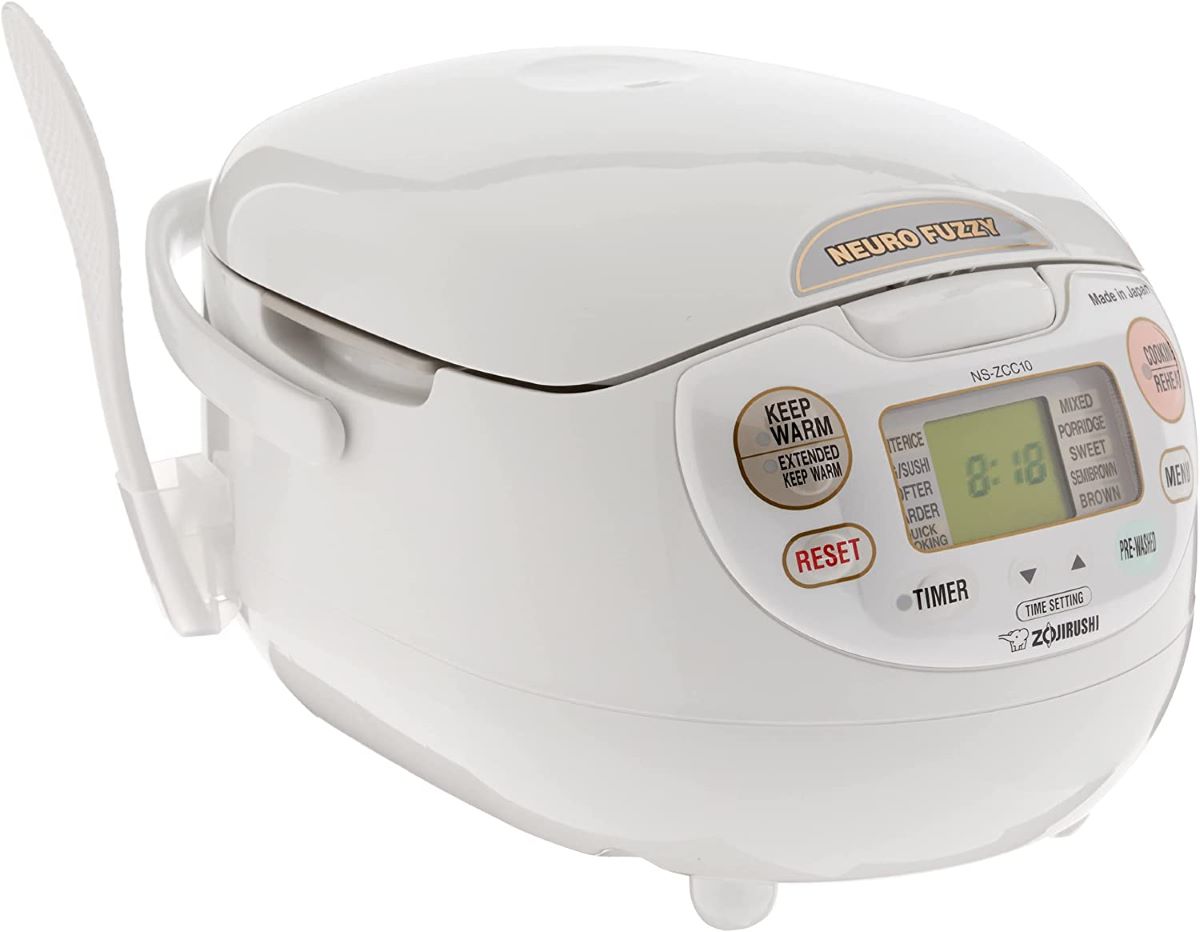
The Zojirushi NS-ZCC10 has been a fixture at or near the top of “best rice cooker” lists for over a decade. Expert roundups such as Wirecutter’s rice cooker guide have recommended Zojirushi machines for years, and the NS-ZCC10’s Amazon listing has accumulated a large base of long-term owner reviews over that time. That kind of staying power isn’t luck; it’s engineering.
This isn’t a trendy gadget. It’s a precision instrument that happens to sit on your kitchen counter. At ~$200, it’s among the most expensive non-pressure rice cookers you’ll encounter — and aggregated long-term owner reviews suggest it’s worth every penny.
Specs worth knowing (per Zojirushi’s official NS-ZCC10 page): 5.5-cup capacity measured with the included 180 ml cup (the “10” in the model name refers to the 1.0 L inner pot), Micom control with Neuro Fuzzy logic, a spherical non-stick inner pot, a retractable cord, and Made-in-Japan assembly. Cooking for a crowd? The NS-ZCC18 is the same machine sized up to 10 cups — our rice cooker size guide and our picks for feeding a family cover when that jump makes sense. And if you’ve ever wondered why the included cup is smaller than a US cup, we explain that here.

What Is “Neuro Fuzzy” Actually?
Most rice cookers are either “dumb” (on/off thermal switch) or “smart” (Micom with basic logic). The NS-ZCC10 sits at the top of the second group with Neuro Fuzzy Logic — Zojirushi’s brand name for its most advanced fuzzy-logic controller. For the full taxonomy, see Neuro Fuzzy vs Micom and Fuzzy Logic vs Micom vs Neuro Fuzzy.
How It Works in Practice
- The controller watches the pot’s temperature curve — how fast it climbs and where it plateaus — rather than blindly switching on and off.
- Fuzzy rules evaluate conditions. Conceptually: “IF temperature rise IS slow AND elapsed time IS short THEN water amount IS large → extend the boiling phase.”
- The program self-corrects mid-cook, re-weighting power and time targets as conditions change. (Deeper dive: What is a Neuro Fuzzy Logic Rice Cooker?)
Real-world example: if you accidentally add a splash too much water — even measured knuckle-method loose — a basic cooker produces mushy rice. The Zojirushi infers the excess water from the sluggish temperature rise and extends cooking at reduced power. Result: correct rice anyway. It fixes your mistakes, which is also why the exact water-to-rice ratio matters a little less on this machine than on cheaper ones.
You’ll hear it play “Twinkle Twinkle Little Star” when it starts; that’s the signal that the microcomputer has initialized and the cook program is underway.
The Spherical Inner Pot
This is one of those details that sounds like marketing until you understand the physics.
A flat-bottom pot creates a temperature gradient: the rice touching the bottom gets significantly more heat than the top. The NS-ZCC10’s curved spherical pot promotes natural convection currents; hot water rises up the center, cooler water descends along the sides. Every grain gets more equal heat exposure.
The pot also features stay-cool side handles, so you can lift a hot pot out of the machine without oven mitts. It’s a small detail that defines the Japanese design ethos: thoughtful engineering in service of daily use.
What Owners Report, Grain by Grain
A note on method: everything below is synthesized from aggregated owner reviews and the settings described in Zojirushi’s documentation — not lab measurements. Times are approximations and vary with batch size, water temperature, and ambient conditions.
| Grain | Setting | Typical time | Result | Notes |
|---|---|---|---|---|
| Short-grain white | White/Regular | ~45 min | Excellent | Restaurant-quality. Fluffy, distinct grains. |
| Sushi rice | Sushi | ~50 min | Very good | Slightly stickier, good for rolling — more in our sushi rice picks. |
| Brown rice | Brown | ~85 min | Very good | Tender throughout, no hard centers — see best for brown rice. |
| Mixed grain | Mixed | ~65 min | Very good | Each grain cooked to its own ideal texture. |
| Porridge | Porridge | ~60 min | Very good | Smooth Japanese-style okayu — our congee guide covers why a dedicated porridge mode matters. |
| Quick Cook | Quick | ~25 min | Good | Faster but slightly less fluffy. Acceptable weeknight rice. |
The consistency is the real story. Owners consistently describe reliable, repeatable results cook after cook, with very few bad batches. That’s the Neuro Fuzzy advantage: it compensates for the tiny variations (ambient temperature, rice age, humidity) that make basic cookers inconsistent. The same pattern shows up in our Reddit-consensus roundup — the ZCC10 comes up constantly in “which rice cooker should I buy” threads.
Keep-warm note: the machine holds rice at serving temperature after cooking, but rice shouldn’t live there indefinitely — our keep-warm safety guide and cooked-rice storage guide cover the time limits.
The Trade-Off: Speed
The NS-ZCC10 is slow. White rice takes 40-50 minutes compared to 20-25 in a basic pot. The extended soaking, graduated heating, and steaming phases that make the rice excellent also make you wait.
Quick Cook mode cuts this to ~25 minutes, but you sacrifice some texture; the rice is still good, just not extraordinary. For daily weeknight cooking, Quick Cook is perfectly adequate.
If speed is your top priority, pressure cooking is the better tool: our best pressure rice cooker picks (Cuckoo and Zojirushi) do comparable rice in roughly 25-30 minutes, and Zojirushi vs Cuckoo breaks down the two design philosophies.
Zojirushi NS-ZCC10 vs. the Competition
| Feature | Zojirushi NS-ZCC10 | Cuckoo CRP-ST1009FG | Tiger JBV-A10U |
|---|---|---|---|
| Price (approx.) | ~$198 | ~$250 | ~$85 |
| Technology | Neuro Fuzzy | Fuzzy + Twin Pressure | Micom |
| White rice time | ~45 min | ~25 min (pressure) | ~35 min |
| Texture quality | Benchmark | Excellent | Good |
| Brown rice | Great (slow) | Great (fast) | Good |
| Build quality | Made in Japan | Korean | Japanese |
| Unique feature | Neuro Fuzzy logic | Open Cooking mode | Synchro-Cooking plate |
| Best for | Perfectionists | Speed + versatility | Budget buyers |
Prices are approximate street prices at the time of writing and move around. For deeper breakdowns: Cuckoo vs Zojirushi vs Tiger, Zojirushi vs Tiger, and our Tiger JBV-A10U review.
Within the Zojirushi Line
The NS-ZCC10 isn’t the only Zojirushi worth considering. The NP-HCC10 vs NS-ZCC10 comparison covers whether induction heating justifies the step up, and our Zojirushi induction guide plus is an induction rice cooker worth it? treat the question generally.
Who Should Buy This?
Buy it if:
- You eat rice 3+ times per week and want consistent results every time
- Consistency matters more to you than speed
- You plan to keep it for 10+ years (by the cost math below, it can outlast several budget cookers)
- You appreciate Japanese engineering and the “buy once” philosophy — is Zojirushi worth it? is our honest breakdown
Skip it if:
- You cook rice once a week or less (overkill — start with the rice cooker buying guide)
- Speed is your top priority (get a pressure cooker — see above)
- You’re on a strict budget (the Tiger JBV-A10U at roughly $85 is excellent)
- You want multi-cooker features — the Zojirushi is only a rice cooker, and rice cooker vs Instant Pot covers that trade

Grainy’s Verdict 🍙
The Zojirushi NS-ZCC10 is not just a rice cooker; it’s a precision instrument disguised as a kitchen appliance. It remains the benchmark other cookers are measured against.
The slower cook times are a real trade-off, but the consistency is unmatched in owner reports, cook after cook. That’s the promise of Neuro Fuzzy: correct rice, every time, without thinking about it.
Bottom line: If your budget allows, this is THE rice cooker to buy. Period.
Frequently Asked Questions
What makes the Zojirushi NS-ZCC10 special?
Its Neuro Fuzzy controller watches how the pot’s temperature rises and adjusts power and timing throughout the cycle, so small measuring errors get corrected mid-cook instead of ruining the batch. Combine that with the even heat of the spherical pot and you get the consistency owners describe.
Is the Zojirushi NS-ZCC10 worth the price?
If you cook rice regularly and want foolproof results, the owner consensus says yes: commonly reported 10-15 year lifespans make it a reasonable long-term investment compared with repeatedly replacing cheaper cookers. Our lifespans-by-type-and-brand guide has the fuller picture.
Cleaning and Long-Term Maintenance
The NS-ZCC10’s build quality is evident in how it ages: long-term owners often describe exteriors that still look new after years of daily use. Here’s how to keep the internals matching (full walkthrough in how to clean a rice cooker):
Inner pot: The thick non-stick coating is significantly more durable than budget cookers’. Use silicone or wooden utensils exclusively; the spherical shape makes metal utensils especially damaging at the curved edges. When the coating eventually wears, replacement pots are available — see our inner pot replacement guide.
Inner lid: Detachable for cleaning. Remove and wash after every use; starch accumulates here and affects the seal quality. This is the most-overlooked maintenance step.
Steam vent cap: The small cap on top of the lid collects starch and condensation. Rinse under running water weekly. If rice starts tasting slightly stale, a dirty vent cap is a common culprit.
Heating plate: Wipe with a damp cloth monthly. The spherical pot can leave small rice particles between pot and plate during removal; these carbonize over time and create hot spots. Hard-water scale is the other slow killer — our hard water guide covers prevention.
Retractable cord: Pull gently and let it retract slowly. Yanking creates internal stress that can eventually fray the wire.
If the display ever flashes an H, C, or E code instead of cooking, don’t panic — our Zojirushi error code guide maps each code to its fix.
Replacement Parts Availability
Zojirushi is exceptional at parts support: replacement inner pots, inner lids, and accessories are sold directly through Zojirushi America’s parts channels for models going back many years — far beyond the 2-3 years of availability typical of budget brands. For a compatibility-oriented walkthrough, see our inner pot replacement guide.
Warranty and Brand Trust
Per Zojirushi’s official documentation, cookers sold in the US carry a limited warranty (one year on this class of machine — confirm current terms on Zojirushi’s site). In practice, many Zojirushi cookers far outlast their warranty; owner reports commonly describe 10-15 years of service, with the inner pot coating being the only expected replacement.
Back-of-envelope math: at ~$200 over 15 years, that’s roughly $13 per year — cheaper than replacing a $30 budget cooker every three years ($10 per year), with significantly better rice. Lifespans vary with use and care, so treat that as illustrative rather than a guarantee (more in how long do rice cookers last?).
As an Amazon Associate we earn from qualifying purchases.
Related:
- Best Zojirushi Rice Cookers →
- Zojirushi NP-HCC10 vs NS-ZCC10 →
- Water Ratio Guide →
- How to Clean a Rice Cooker →
- 🆚 Zojirushi vs Tiger →
- How to Use a Zojirushi →
How this review is researched: it synthesizes aggregated owner reviews, manufacturer specifications, and expert roundups. Approximate times and prices are just that — approximations.
✅ Pros
- Unbeatable consistency, perfect rice every time
- Made in Japan; owners commonly report 15+ year lifespans
- Neuro Fuzzy logic adapts to your mistakes
- Retractable power cord for counter space
- Spherical inner pot for even heat distribution
❌ Cons
- Slower cooking (40-60 minutes for white rice)
- Premium price point ($200+)
- Non-retractable cord on some sizes
🍚 You Might Also Like
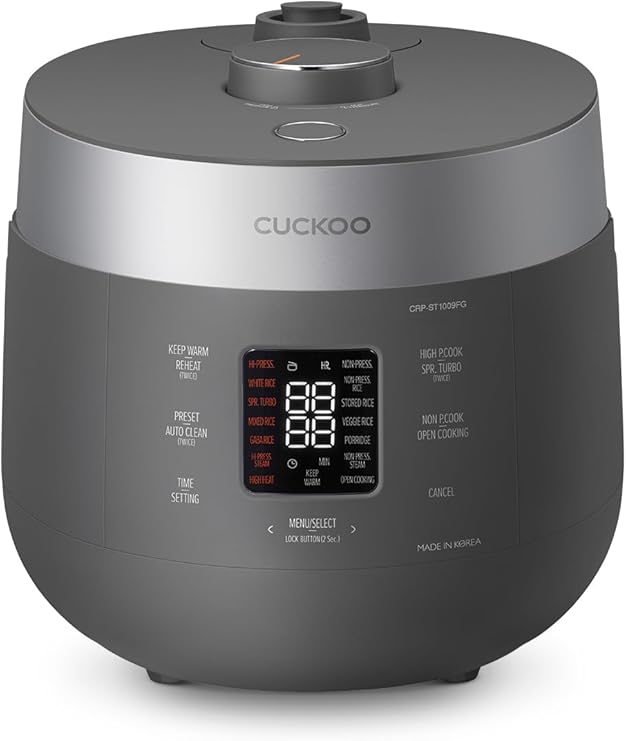
CUCKOO CRP-ST1009FG Review: The Twin Pressure Master
If you want speed AND texture options, this is the one to buy.
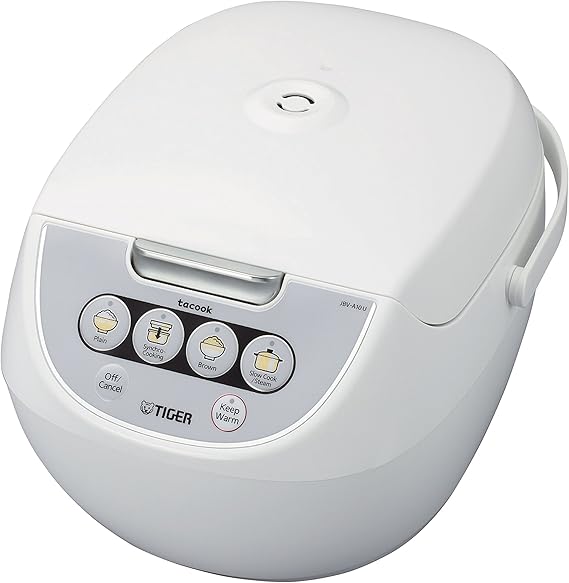
TIGER JBV-A10U Review: 5.5-Cup Micom With Synchro-Cooking
A reliable daily driver that just works. Highly recommended for students and small families.
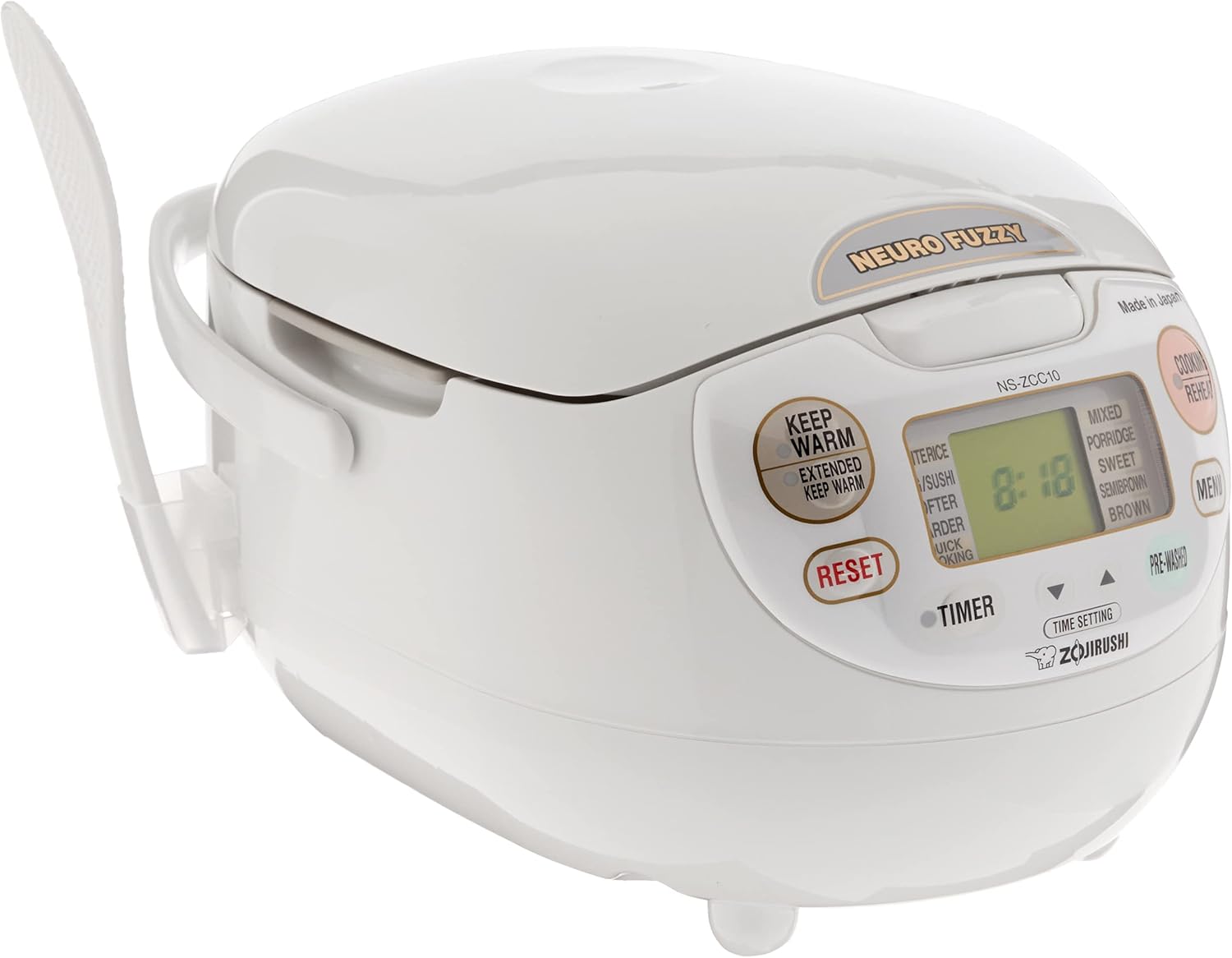
The 5 Best Fuzzy Logic Rice Cookers (Tested)
For perfect, restaurant-quality rice at home, you need a rice cooker with real fuzzy logic. After extensive testing, the Zojirushi NS-ZCC10 and Tiger JBV-A10U remain our top picks for 2026.
Ready to Upgrade Your Rice Game?
The Zojirushi NS-ZCC10 is waiting for you. Perfect rice, every time.
Buy on Amazon 🍚 🛒