
Best Rice Cooker for Congee (2026): Smooth, Silky Porridge Every Time
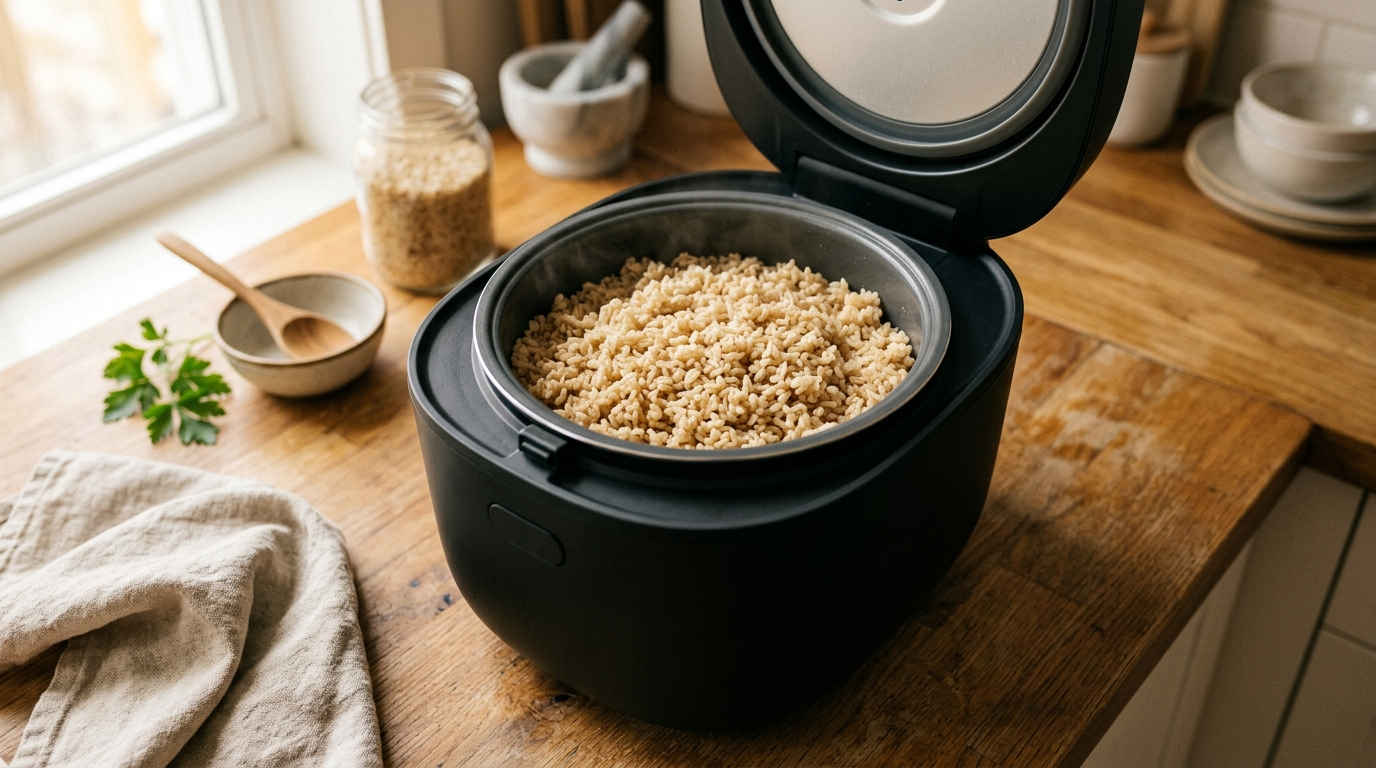
The best rice cookers for congee combine a dedicated porridge cycle with fuzzy-logic temperature control and a deep non-stick pot. Here's what to look for and the models that nail silky rice porridge.
As an Amazon Associate we may earn a commission from qualifying purchases made through links on this page, at no extra cost to you.
Congee — the slow-simmered rice porridge known as jook in Cantonese, okayu in Japanese, lugaw in Filipino, and kanji across much of South India — is one of the most comforting things you can make from a bag of rice. It’s also one of the most demanding things to ask of a rice cooker. A proper batch is mostly water (commonly six to twelve parts water to one part rice by volume), and that much liquid, simmered for an hour or more, will expose every weakness in a cooker: thin pots boil over, dumb thermostats scorch the bottom, and a keep-warm cycle that runs too hot turns silky porridge into paste.
This guide is a research synthesis. We’ve drawn on manufacturer specification sheets and a broad read of verified owner reviews to identify which features and models actually make smooth congee — rather than our own hands-on testing. Here’s what matters and which cookers nail it.
What makes congee different from regular rice
When you cook regular rice, you’re aiming for distinct, tender grains hydrated by just enough water. Congee is the opposite: you want the grains to slough off their starch and partially break down, thickening the cooking water into a glossy, spoonable texture. That requires:
- A lot of water relative to rice — from roughly 1:6 up to 1:12 or beyond, depending on how thick you like it (Wikipedia: Congee).
- Time — anywhere from 45 minutes to a couple of hours of gentle simmering.
- Low, even heat — high heat just foams over; the goal is a lazy bubble.
That combination is exactly what a basic on/off rice cooker is worst at, and exactly what a fuzzy-logic cooker is engineered for.
What to look for in a rice cooker for congee
Not every fuzzy-logic cooker is equally good at congee. Here are the features that matter most, based on how the porridge cycle actually behaves:
A dedicated porridge (or congee) menu. This is non-negotiable. The porridge cycle holds the pot at a lower temperature for longer than a white-rice cycle, which is what lets the starch release slowly instead of boiling over or burning. If a cooker’s menu doesn’t list “Porridge,” “Congee,” or “Okayu,” it’s the wrong tool — a standard cycle run with that much water will either trip the thermostat early or foam out the steam vent.
Fuzzy-logic / Micom temperature control. A microcomputer cooker doesn’t just switch on and off; it adjusts heat in small increments as it senses temperature and moisture. For congee, that means it can hold a simmer instead of lurching between a rolling boil and nothing. For more on the difference, see our fuzzy logic vs. Micom explainer and our neuro fuzzy logic rice cooker guide.
A deep, well-sealed, non-stick inner pot. The single most common complaint about homemade congee is boil-over — starchy foam creeping out of the lid and onto the counter. A deeper pot and a tight-fitting lid with a good steam vent buy you headroom, and a quality non-stick coating means the inevitable starchy residue cleans up easily (see our rice cooker cleaning guide for the stubborn stuff).
A gentle, extended keep-warm. Congee is often made ahead and eaten across a morning, so keep-warm matters. You want a cooker that holds a food-safe temperature without continuing to cook the porridge into glue. Our keep-warm food-safety guide covers how long is reasonable.
A delay timer. Congee is a breakfast food, and soaking the rice overnight so it’s ready when you wake up is one of the great underused features of a fuzzy-logic cooker.
Our top picks for congee
These are the cookers that come up again and again in owner reviews for making great congee. Prices fluctuate; check current pricing at the linked listings.
| Model | Type | Capacity (uncooked) | Why it’s good for congee |
|---|---|---|---|
| Zojirushi NS-ZCC10 Neuro Fuzzy | Fuzzy logic (Micom) | 5.5 cup | Dedicated Porridge cycle; excellent temp control |
| Zojirushi NP-HCC10 | Induction heating | 5.5 cup | Even, precise heat; very smooth texture |
| Tiger JAX-T10U | Micom | 5.5 cup | Porridge setting plus sync cooking; strong value |
Best overall: Zojirushi NS-ZCC10 Neuro Fuzzy
The NS-ZCC10 on Amazon is the model reviewers mention most often for congee, and it’s easy to see why. According to Zojirushi’s own product information, it uses advanced fuzzy-logic (“Neuro Fuzzy”) temperature control and includes a dedicated Porridge menu alongside its regular rice cycles. Owners consistently describe the congee it produces as smooth and well-textured, with no scorching at the bottom — the payoff of that low-and-slow porridge algorithm. It’s a 5.5-cup (uncooked) cooker, which suits most households. Its main limitation is speed: a porridge cycle on a fuzzy-logic cooker is genuinely slow, often an hour or more, because that’s the entire point.
Best premium: Zojirushi NP-HCC10 (induction)
If you want the silkiest possible texture and don’t mind paying for induction heating, the NP-HCC10 on Amazon is the upgrade. Induction heating surrounds the pot with a magnetic field rather than a single bottom element, so heat is more even and the cooker can dial the temperature with finer granularity — useful when you’re trying to hold a barely-there simmer for an hour. We compare the two head to head in our NP-HCC10 vs. NS-ZCC10 guide. If you’re on the fence about whether induction is worth the premium for you at all, our induction rice cooker cost-benefit analysis walks through the tradeoffs.
Best value: Tiger JAX-T10U
Tiger’s Micom cookers consistently include a Porridge setting and cost meaningfully less than the Zojirushi picks, which makes the JAX-T10U on Amazon the sweet spot for budget-conscious buyers. Owner reviews note solid congee results plus the perk of Tiger’s “tacook” synchronized cooking — a plate that lets you steam something on top while the rice cooks below. It won’t match a Zojirushi induction cooker for textural finesse, but for the price it’s a capable, reliable congee maker.
For big batches: go large-capacity
Congee scales well, and if you’re feeding a crowd (or want leftovers), a 10-cup fuzzy-logic model is the move — the Zojirushi NS-ZCC18 and NS-TSC18 are the larger siblings of the picks above and keep the Porridge cycle. Our best large-capacity rice cooker guide covers sizing in depth, and our general rice cooker size guide helps you avoid buying too big or too small.
For the softest texture, fastest: a pressure cooker
Pressure rice cookers can collapse rice into an exceptionally soft, almost creamy porridge in less time. Korean brands dominate here, so our best Korean rice cooker guide and our best pressure rice cooker guide are the right starting points. The tradeoff: pressure produces a more uniform, very soft congee that’s different from the slow-simmered version, and some traditionalists prefer the texture of the long porridge cycle.
How to get the best congee out of your cooker
Even the best cooker needs the right inputs. A few practical notes:
- Pick the ratio for the texture you want. Start around 1:8 rice-to-water by volume for a medium-thick congee, and adjust down toward 1:6 (thick, spoon-standing) or up toward 1:12 (thin and drinkable). Our ultimate rice cooker water ratio chart has more guidance.
- Use the Porridge cycle, not the white-rice cycle. This is the whole reason to buy a cooker with the setting.
- Rinse the rice. A quick rinse removes surface starch that would otherwise foam excessively and cause boil-over.
- Don’t overfill. Even deep pots have a limit; for a very thin congee, cook a smaller batch or do it in two stages — start thicker, then add hot water and extend keep-warm.
- Add delicate ingredients late. If you want fish, shredded chicken, or a raw egg, add them near the end or in the bowl so they don’t disintegrate over the long cook.
You can use white or brown rice. White breaks down faster into that classic silky texture; brown rice makes a heartier, nuttier congee and needs a bit more water and time — see our brown rice in a rice cooker guide.
What to avoid
- Cookers with no porridge cycle. A plain on/off cooker, or a Micom cooker that omits the Porridge menu, will fight you on congee.
- Very small or thin pots. Less headroom means more boil-over.
- If you’re avoiding non-stick coatings, porridge’s long, sticky cook is precisely when coating quality matters most. Our guides on non-toxic rice cookers, ceramic rice cookers, and stainless-steel rice cookers lay out the alternatives — though for congee specifically, a high-quality non-stick pot is what most owners reach for.
A note on keep-warm and food safety
Congee, like any cooked rice dish, sits in the temperature danger zone if it’s held warm-but-not-hot for too long. A good fuzzy-logic keep-warm cycle holds a safe temperature, but it isn’t indefinite. Our keep-warm safety guide has the specifics on time limits and when to refrigerate leftovers instead.
Frequently asked questions
Can I make congee in any rice cooker? You can simmer rice and water in almost anything, but without a dedicated porridge cycle you’re likely to get boil-over, scorching, or a cycle that shuts off before the rice breaks down. A fuzzy-logic cooker with a Porridge menu makes it dramatically easier.
White or brown rice for congee? White is traditional and breaks down into the smoothest texture. Brown works too and adds a nuttier flavor; it just needs more water and a longer cook. Our brown rice guide has the details.
Do I need induction? No. Standard fuzzy-logic (Micom) cookers like the NS-ZCC10 make excellent congee. Induction gives finer temperature control and a marginally smoother result, at a higher price — see our induction cost-benefit guide.
What ratio should I use? Roughly 1:8 rice-to-water by volume for a medium congee, adjusting to taste (1:6 for thick, up to 1:12 for thin). See our water ratio chart.
The verdict
For most people, the Zojirushi NS-ZCC10 Neuro Fuzzy is the best rice cooker for congee: it pairs the Porridge cycle, fuzzy-logic temperature control, and a deep non-stick pot that make smooth, unburnt porridge reliable. Step up to the NP-HCC10 if you want induction’s extra evenness, choose the Tiger JAX-T10U to save money, go large for big batches, or reach for a Korean pressure cooker for the softest texture fastest. Whatever you pick, the feature that truly matters is a dedicated porridge cycle — without it, you’re simmering, not cooking congee.
Related: Rice Cooker Congee Overnight: Wake Up to Perfect Porridge Every Morning.
Related Articles
Best Rice Cooker for Sushi Rice: Top 5 Picks for Perfect Shari
Sushi rice demands exact texture — firm, glossy, and slightly sticky. We researched rice cookers specifically for sushi rice and ranked the 5 best models for home sushi making.
buying-guidesBest Rice Cooker for Brown Rice in 2026: Fuzzy Logic & Induction Picks
Brown rice keeps its bran and germ, so it needs more water, a longer cook, and steadier heat than white rice. These fuzzy-logic and induction rice cookers handle all three — here is how to pick.
buying-guidesBest Rice Cooker for Indian Cooking: Biryani, Pulao, and Basmati
Find the best rice cooker for Indian cooking, including models tested with basmati, biryani, pulao, and jeera rice recipes in 2026.