Tatung TAC-11KN Review: The All-Stainless Indirect-Heat Workhorse
"The Taiwanese heirloom cooker. It is not fuzzy logic and it is not fast, but its all-304-stainless build and steam-and-stew versatility earn the cult following. If you want a big, coating-free workhorse that lasts, this is it."
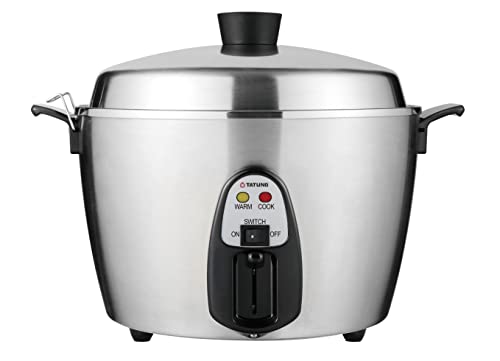
The 30-Second Pitch ⏱️
The Tatung TAC-11KN is the cooker your Taiwanese grandmother would recognize on sight. It is a big, all-stainless, indirect-heat machine that has barely changed in decades because it did not need to. Owner reviews circle the same themes again and again: it lasts, it does more than rice, and there is no coating to worry about.
Here is the honest framing up front. This is not a fuzzy-logic or Micom cooker, and it does not pretend to be. There are no sensors quietly adjusting the cook. You add water to the outer chamber, press the lever, and physics does the rest. If you want a cooker that thinks for you, look elsewhere. If you want a coating-free workhorse that steams, stews, and braises for a decade, this is the cult pick.

A quick note on how we review: Grainy does not run a lab. This rating is a synthesized consensus drawn from owner reviews and Tatung’s published specifications. When we say “owners report,” that is exactly what we mean.
How Indirect Heating Actually Works
This is the part that trips up first-time buyers, so let’s be clear about it.

A Zojirushi Micom heats the inner pot directly and reads sensors to adjust. The Tatung works differently. You pour a measured amount of water into the outer pot, set the inner pot (with your rice and its own water) inside, and switch it on. The element boils the outer water into steam, which gently and evenly heats the inner pot. When the outer water runs out, the cooker trips to keep-warm automatically.
That design has two real consequences owners mention constantly:
- The outer-water amount is your “setting.” More outer water means a longer, gentler cook; less means a shorter one. There is no dial to think for you, so a measuring habit matters. Our rice-to-water ratio guide helps you get the inner pot right; the outer pot is where Tatung owners develop their own feel.
- Even, forgiving heat. Because the heat arrives as steam around the whole pot rather than from a single plate, owners report it is gentle on the rice and doubles neatly as a steamer and stew pot. For the broader appliance debate, see rice cooker vs. multicooker.
What “Multi-Functional” Really Means Here
Tatung lists four modes, and the versatility is a genuine selling point rather than marketing filler. Per the specs, the accessories in the box include a steam plate, an inner-pot lid, a rice spatula, and a measuring cup.
- Rice: the everyday job, done with the indirect-steam method above.
- Steam: fill the outer pot and use the steam plate for vegetables, seafood, or dumplings.
- Stew and braise: owners lean on this cooker for soups and long-simmered dishes in cooler months, which is where a big stainless pot shines.
Because both pots are bare 18/8 stainless, cleanup is straightforward and there is nothing to scratch. If a coating-free pot is your priority, this Tatung sits alongside picks like the Buffalo IH Smart Cooker and the broader stainless-steel rice cooker guide and non-toxic rice cooker rundown.

Performance: What Owners and Specs Actually Say
We did not stopwatch this cooker in a lab. The table below synthesizes owner-reported experience and Tatung’s published behavior.
| Category | Consensus from owners and specs | Notes |
|---|---|---|
| Durability | Exceptional | The single most repeated praise; many owners cite many-year, even multi-decade, lifespans |
| Coating-free build | A key draw | Bare 18/8 stainless inner and outer pots, nothing to flake |
| Versatility | High | Rice, steam, stew, and braise from one machine |
| Rice consistency | Good, technique-dependent | Even results once you learn the outer-water amount |
| Ease of use | Moderate | The indirect method is simple but unfamiliar at first |
| Capacity | Large | 11 cups uncooked suits families and gatherings, overkill for one |
The recurring theme is longevity and simplicity. Owners do not describe the TAC-11KN as clever; they describe it as the cooker that outlived three of its fancier neighbors. That is the whole pitch.
Tatung vs. a Zojirushi Micom
These get cross-shopped constantly, so here is the honest split.
| Feature | Tatung TAC-11KN (this cooker) | Zojirushi Micom (e.g. NS-TSC10) |
|---|---|---|
| Technology | Indirect steam heating, mechanical | Micom fuzzy logic with sensors |
| Inner pot | Bare 18/8 stainless, no coating | Non-stick coated pan |
| Hand-holding | You measure the outer water | Sensors adjust automatically |
| Versatility | Rice, steam, stew, braise | Rice-focused, with steam basket |
| Capacity | Large (11 cups uncooked) | Typically 5.5 cups |
| Best for | Coating-free, big-batch, long-life buyers | Set-and-forget everyday rice |
Prices move around, so treat any figure as a snapshot; the Tatung typically lands in the mid-to-upper-$200s. For the deeper brand comparison, see Zojirushi vs. Tatung and our Tatung rice cookers overview.
Who Should (and Shouldn’t) Buy This
Buy it if:
- You want a bare-stainless, coating-free pot and are happy to learn a little technique
- You cook for a family or gatherings and want big capacity plus steam and stew modes
- You value a cooker with a reputation for lasting many years
- You like simple, mechanical reliability over sensors and menus
Skip it if:
- You want a cooker that thinks for you (get a Micom or fuzzy-logic model)
- You cook for one or two and don’t need 11 cups (see the size guide and family-size roundup)
- You want the fluffiest possible white rice with zero fuss (a Zojirushi Micom is more forgiving)
- Counter space is tight; this is a large machine
Care & Longevity Tips 🧹
The Tatung’s longevity reputation is partly design and partly good habits:
- Bare stainless pots: a short soak loosens stuck rice; avoid harsh abrasives if you want to keep the shine. Bar Keepers Friend brings dull stainless back.
- Descale the outer pot: minerals from the outer-chamber water build up over time, especially with hard water. A periodic vinegar boil keeps the heating surface clean.
- Dry everything before storing: stainless is rust-resistant, not rust-proof; drying prevents water spots and pitting.
- Keep the lever and switch clean: the mechanical keep-warm trip is the main moving part, so keep food and starch away from it.
For the full routine, our how to clean a rice cooker guide covers it.
Grainy’s Verdict 🍙
The Tatung TAC-11KN is not the cooker for someone who wants sensors and presets. It is the cooker for someone who wants a big, all-stainless, coating-free machine that steams and stews as happily as it makes rice, and that owners say keeps going for years.
Go in knowing what it is: an indirect-heat workhorse that asks you to measure the outer water and skip the fuzzy-logic conveniences. Make that trade willingly and, per a very loyal owner base, you get a genuine heirloom appliance.
Bottom line: a coating-free, big-batch workhorse with a cult following, if you don’t mind doing a little of the thinking yourself.

As an Amazon Associate we earn from qualifying purchases. Prices and availability change; check the live price before buying. Our rating is a synthesized consensus of owner reviews and manufacturer specifications, not a first-hand lab test.
Related:
- Buffalo IH Smart Cooker Review →
- Zojirushi vs. Tatung →
- Best Stainless Steel Rice Cookers →
- Fuzzy Logic vs. Micom →
- Best Rice Cookers for Families →
We evaluate kitchen products independently. To learn more about our standards, read our Editorial Policy.
✅ Pros
- Both inner and outer pots are 18/8 (304) stainless with no non-stick coating to flake
- Big 11-cup uncooked capacity (about 22 cups cooked) for families and gatherings
- Indirect steam heating cooks rice, steams, stews, and braises from one appliance
- Owners report a reputation for lasting many years, sometimes decades
- Simple mechanical operation with a keep-warm switch, nothing to glitch
❌ Cons
- Not a fuzzy-logic or Micom cooker: results depend on you measuring the outer-pot water
- There is a learning curve to the indirect-heat, add-water-to-the-outer-pot method
- No sensor smarts means less hand-holding than a Zojirushi Micom
- Large footprint; the 11-cup size is a lot of cooker for a small kitchen
- Premium price for a cooker with basic, no-frills electronics
Frequently Asked Questions
Is the Tatung TAC-11KN a fuzzy-logic rice cooker?
No. The TAC-11KN is a traditional indirect-heat cooker, not a Micom or fuzzy-logic model. There are no moisture or temperature sensors adjusting the cook. Instead, you add water to the outer pot; the element boils that water to steam-cook the inner pot, and the cooker switches to keep-warm once the outer water evaporates. It rewards a little technique rather than doing the thinking for you.
What is the inner pot made of?
Per Tatung's specifications, both the inner and outer pots are 18/8 (food-grade 304) stainless steel with no non-stick coating. That is the main reason coating-conscious shoppers seek it out: there is no chemical layer to wear off or flake into your rice. The tradeoff is that rice can stick to bare stainless until you dial in your water ratio.
How much rice does it make?
Tatung rates it at up to 11 cups of uncooked rice, roughly 22 cups cooked. That is a large-family or gathering size. If you cook for one or two, this is more cooker than you need and a compact model will suit you better.
🍚 You Might Also Like
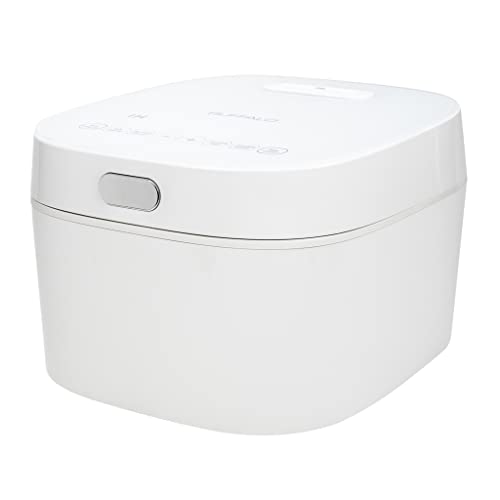
Buffalo Smart Cooker IH Review: The No-Coating, Bare-Stainless Pick
The pick for anyone who wants zero non-stick coating in the pot. You trade a little convenience for a bare 304-stainless inner pot that simply can't flake. If coating-free is your priority, that trade is worth it.
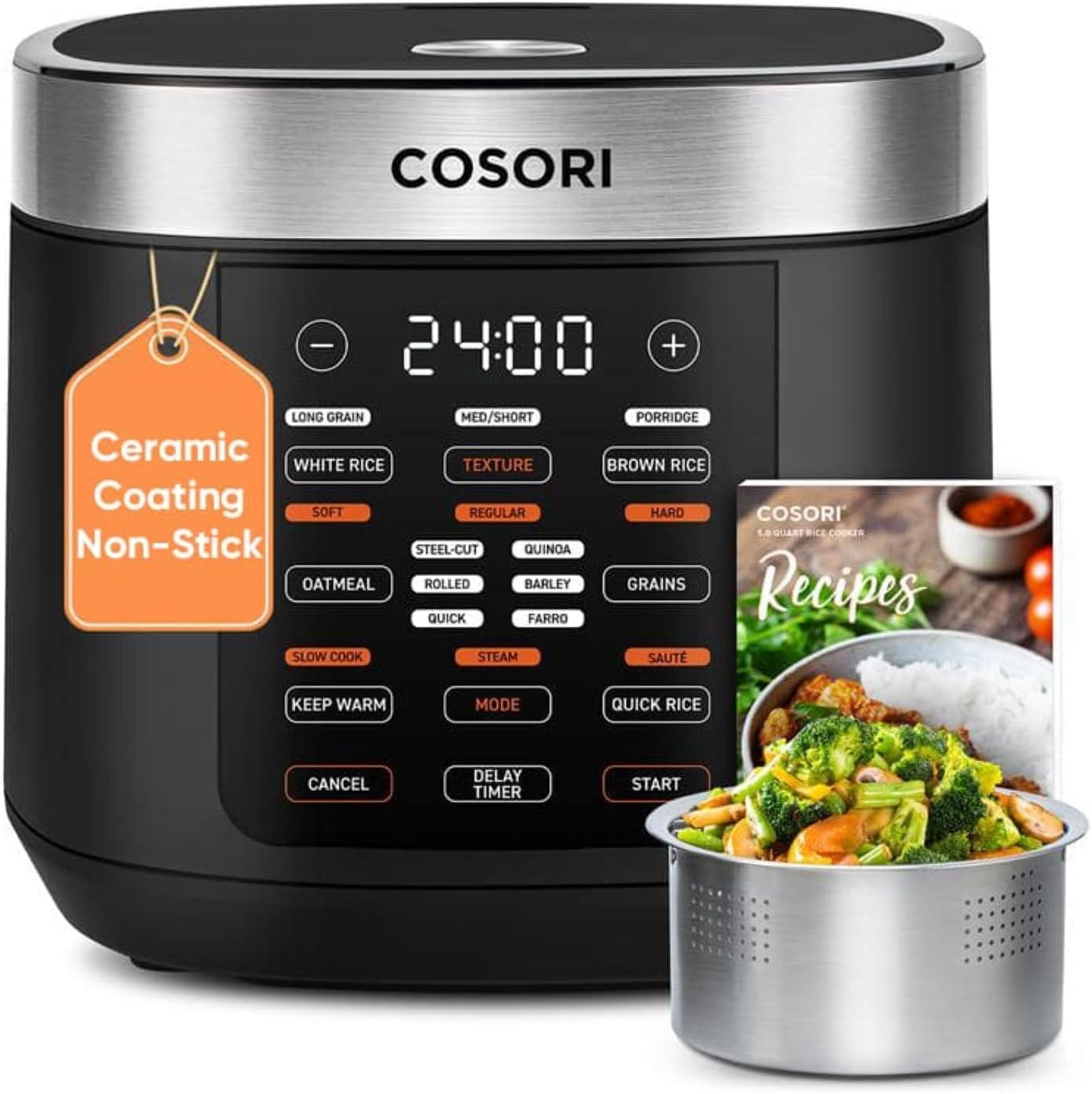
COSORI CRC-R501 Review: 10-Cup Fuzzy Logic, 18 Presets
The COSORI CRC-R501 is the best mid-range fuzzy logic rice cooker on Amazon. At $120, it delivers Zojirushi-level technology (true fuzzy logic, multi-stage heating) at less than half the price. The 4.8-star rating across thousands of reviews isn't hype, this cooker genuinely produces excellent rice.
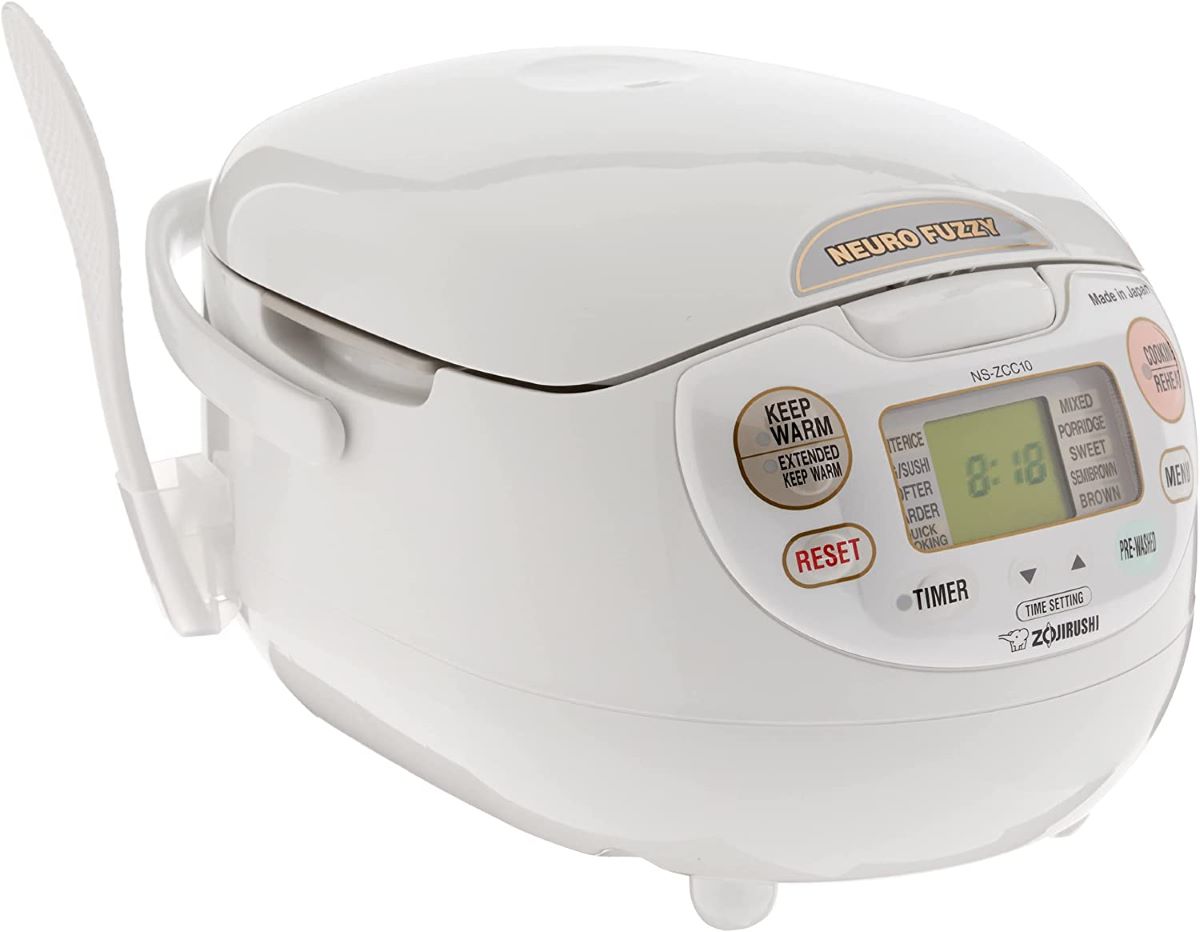
Zojirushi NS-ZCC10 Review: The Neuro Fuzzy Legend
The gold standard of fuzzy logic rice cookers. If your budget allows, this is the one to buy.
Ready to Upgrade Your Rice Game?
The Tatung TAC-11KN(UL) is waiting for you. Perfect rice, every time.
Buy on Amazon 🍚 🛒